
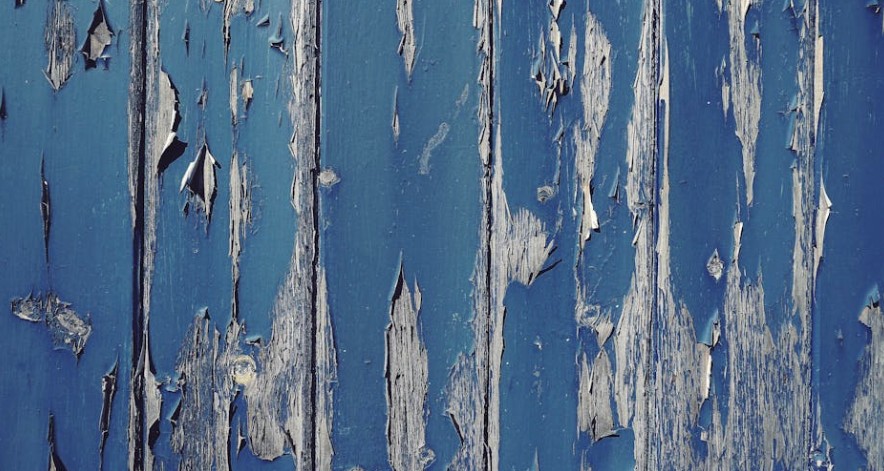
Peeling paint on wood siding, with bare grey wood exposed where the paint film has failed

Dayton Siding Services

Wood Siding Replacement in Dayton, Ohio

Wood siding can last decades with upkeep, or fail fast without it. We'll tell you which boards can be saved and what your options are if they can't.

  • VSI Certified Installer
  • Serving Dayton since 2012
  • Fully insured
  • Free siding assessment
2012
Serving Dayton since
150+
Five-star Google reviews
VSI
Certified installation standard
FREE
Siding assessment, no obligation

Cedar, engineered wood, clapboard

Wood siding replacement in Dayton

Wood siding is the only common cladding where individual boards can be replaced without touching the rest of the wall. That's its real advantage, and it's why a wood siding problem is often smaller than it looks.

It's also the only common cladding with a standing maintenance obligation. Paint or stain is what keeps water out of the grain, and once that film fails, the clock starts.

We work on cedar, engineered wood, and painted clapboard throughout Dayton, Kettering, Centerville, and Beavercreek — and we'll tell you honestly when replacement in kind is worth it and when it isn't.

If only a section has failed, a siding repair may be all you need. If the whole envelope is at the end of its life, that becomes a full siding project instead.

What's included

  • 01 Individual board replacement
  • 02 Full wood siding replacement
  • 03 Cedar and engineered wood installation
  • 04 Rotted substrate repair
  • 05 House wrap replacement
  • 06 Trim and corner board replacement
  • 07 Flashing at windows and doors
  • 08 Prime and finish coating

Failure modes

What goes wrong with wood siding

Wood fails in four recognisable ways, and three of them are fixable a board at a time. Select what matches your home.

ROT AT BOTTOM EDGE CUPPING SPLITTING AT FASTENERS PAINT FAILURE

Board replacement
Rot at the bottom edge. Decay starts where water sits longest — the lower lap of the bottom course, and the boards directly beneath windows. If it is confined to a few boards and the sheathing behind them is dry, those boards come off and new ones go on.

Board replacement
Cupping and warping. A board that has taken up moisture unevenly curls away from the wall — the section strip on the left is where you can actually see it. A cupped board will not flatten back, and it strains the fasteners holding its neighbours.

Board replacement
Splitting at fasteners. Cracks radiating from nail heads and running with the grain. Usually a board fastened too close to its end, or water in the end grain that froze and expanded. Split boards get replaced, not filled.

Substrate is the question
Paint failure across the elevation. Peeling and blistering over several courses with bare grey wood underneath is rarely a paint problem. It usually means moisture is reaching the back of the boards. Until we know whether the wood behind that film is sound, refinishing is a guess. More on why exterior paint peels and fails.

Board or whole wall

Can individual boards be replaced?

Usually, yes — and this is where wood genuinely beats vinyl. Vinyl locks course to course, so pulling one panel means disturbing its neighbours. Wood boards are fastened independently. A rotted board comes off and a new one goes on.

Board replacement

Usually best when

  • Damage is confined to a few boards
  • The rest of the elevation is sound
  • Paint film is still intact elsewhere
  • Matching profile is still available
  • Sheathing behind is dry
Full replacement

Usually best when

  • Rot appears on more than one elevation
  • Paint is failing across the whole wall
  • Boards are cupping in multiple places
  • The profile is no longer milled
  • Moisture has reached the sheathing

The matching caveat

New boards take stain and paint differently from boards that have weathered for twenty years. The wood is denser, the grain is tighter, and the finish sits on top rather than soaking in the way it did on siding that has been through two decades of Ohio summers.

We prime all six faces before installation, and when the match matters we can pull replacement boards from a less visible elevation — a rear or garage wall — and put the new material there instead.

What we won't do

Install a repair that reads as a patch and let you find out afterwards. If a board-for-board fix is going to be visible from the street, we say so before we quote it, and we show you the finished match in daylight.

It is a fair question to put to anyone quoting the job. Our notes on choosing a siding contractor in Dayton cover what else to ask while you have them on the phone.

Material comparison

Wood, engineered wood, fiber cement, or vinyl?

All four are legitimate choices. Wood buys you real grain and board-level repairability; the alternatives buy back the maintenance cycle. We don't push one.

Attribute
Wood
Engineered wood
Fiber cement
Vinyl
Authentic wood grain
Real wood
Real wood fibre
Simulated
Simulated
Maintenance required
Highest
Periodic
Low
Minimal
Rot resistance
Low
Treated
Excellent
Does not rot
Insect resistance
Low
Treated
Excellent
Excellent
Impact resistance
Good
Good
Excellent
Fair
Individual board replacement
Yes
Yes
Possible, harder
Course-locked
Initial investment
Higher
Mid-range
Highest
Lowest
Refinish and colour change
Repaintable
Repaintable
Repaintable
Limited

Why homeowners keep wood

Nothing else looks like it up close. Real cedar has depth and a grain pattern that embossed products approximate rather than reproduce, and on an older Dayton home the profile is often part of what makes the house look right. Wood also takes a colour change properly — you can repaint it as often as you like.

And it is the only one of the four you can genuinely repair a board at a time, which over a long ownership is worth more than it sounds.

Why some move to fiber cement

It holds a painted finish far longer than wood does, it doesn't rot, insects have no interest in it, and it is noncombustible. Homeowners who like the look of painted lap siding but are tired of the refinishing obligation usually land here.

Why some move to vinyl

Lowest upfront investment, and effectively no refinishing obligation at all. The trade-offs are a moulded rather than milled grain and course-locked panels. See vinyl siding replacement, or our comparison of fiber cement and vinyl siding.

Local conditions

Why Ohio weather is hard on wood siding

Freeze-thaw
Humidity swings
Wind-driven rain
UV exposure
Snow at grade
Insect pressure

Southwest Ohio cycles wood through repeated wet-dry and freeze-thaw every year. Water absorbed into end grain expands when it freezes, which is what opens splits at fasteners and lifts paint film from the back. The boards nearest grade and directly below windows fail first, every time, because that's where water lingers longest.

The same cycle affects every cladding material differently. What causes siding to warp or buckle in Ohio →

Process

Our wood siding replacement process

Ten steps. The second one decides how big the job is, and the eighth one decides how long it lasts.

01
Full exterior assessmentEvery elevation, not just the visible damage.
02
Probe suspect boards for soft rotWhat looks like a stain is sometimes sound wood, and what looks sound is sometimes gone. We find out before we quote.
03
Identify the profileAnd check whether it is still being milled.
04
Recommend board replacement or full replacement, honestlyIncluding the times we tell you the boards can stay.
05
Remove failed boards or full sidingTrim and corner boards come off carefully so they can go back.
06
Inspect and repair sheathingThe opening is the only honest look at what is behind the wall.
07
Install or upgrade the weather-resistant barrierHouse wrap and flashing at every opening the work touches.
08
Prime all six faces before installationBack, front, both ends, and both edges.
09
Install boards and trimCorrect fastening position and expansion allowance, so the boards can move without splitting.
10
Finish coat and walkthroughSealed on the wall, then walked with you in daylight so you judge the match rather than us.

Step 08 is the one nobody asks about

Back-priming — sealing the hidden face and the cut ends of every board before it goes on the wall — is the single biggest determinant of how long a wood installation lasts. Water that gets behind an unsealed board has nowhere to go but into the grain, and that is what lifts paint from underneath and starts rot you cannot see from the street.

It costs time, not much material, and it is the first thing dropped from a cheap quote because nobody inspects for it. We do it as standard, on board replacements as well as full installations.

It is also why two siding quotes can differ so widely on what looks like the same job.

Why AlphaOne

Why homeowners choose AlphaOne for wood siding

Wood is the cladding that rewards knowing what you are looking at. Our crews carry the certifications and training for it, and the willingness to tell you the boards you have are worth keeping.

01VSI Certified InstallersThe Vinyl Siding Institute credential is about fastening discipline and expansion allowance. Wood moves more than vinyl does, so that discipline carries straight over.
02We Replace Boards When Boards Are the ProblemThree of the four failure modes above are a board-level fix. We quote it that way rather than selling you a wall you don't need.
03Back-Priming as StandardAll six faces sealed before installation, on board replacements as well as full jobs. It is the difference between a repair that lasts and one that comes back.
04Wood, Fiber Cement, and Vinyl ExpertiseWe install all three, which means the recommendation is a recommendation rather than the only thing we sell.
05Warranty-Backed WorkmanshipBoard replacements and full wood installations both sit under the AlphaOne Advantage Warranty, and we put in writing which parts the manufacturer covers instead.
06Local Since 2012Dayton-based since 2012, working the older housing stock where wood siding is still standing.

A full-elevation wood replacement is a larger project than a board swap, and financing is available where that helps. The workmanship is backed by the AlphaOne Advantage Warranty across Dayton and the surrounding service areas.

Wood Siding Replacement FAQs

There is no honest single number, and any contractor who gives you one is guessing. Wood siding is a maintained product rather than a product with a service life: kept sealed, it lasts a very long time. Left unsealed, the same boards can be soft within a few seasons. What decides it is whether the finish is renewed before the film fails, and whether water is getting behind the boards at grade and below the windows — not the age of the wood.

Yes, and it is the most common wood siding job we do. Each board is fastened on its own rather than interlocking with the courses above and below, so a failed board can come out and a new one go in without disturbing sound siding around it. Two things decide whether it is straightforward: whether your profile is still being milled, and whether the sheathing behind the board is dry.

Press it. Sound wood resists; decayed wood gives, and a screwdriver tip will sink into it with almost no effort. Discolouration on its own is not proof, and neither is a rough surface — both can be weathering on wood that is still structurally fine. The reverse is also true: a board that looks acceptable under fresh paint can be soft underneath, which is why we probe rather than eyeball. Check the bottom course first, then directly under every window.

Uneven moisture. When one face of a board takes on water and the other cannot, the wet side swells more, and the board curls away from the wall. It is most common on boards that were never sealed on the hidden face, on south- and west-facing walls that dry fast on the outside, and on flat-sawn boards where the grain direction makes the movement worse. A cupped board does not flatten back once it has dried, and it pulls on the fasteners either side of it.

Often, yes — if the wood under the finish is sound. That is the whole question, and it is not answerable from a photograph. Where the paint is failing in patches on solid boards, preparation and refinishing is the right call. Where paint is lifting across a whole elevation, it usually means moisture is reaching the back of the boards, and a new coat on wet wood will fail the same way. We probe first and tell you which of the two you have.

Back-priming means sealing every face of a board — the hidden back, the visible front, both ends and both edges — before it is fastened to the wall. Unsealed wood absorbs moisture from behind, and that is what lifts paint from underneath and starts decay you cannot see from the street. It adds labour rather than material cost, nobody inspects for it, and it is consequently one of the first things dropped from a low quote. We do it as standard, on single-board replacements as well as full installations.

They are good at different things. Cedar has natural resistance to decay and insects, takes a stain beautifully, and gives you real grain rather than a reproduction of it. Engineered wood — wood fibre bonded with resin and treated in manufacture — comes in longer lengths with fewer joints, is more dimensionally stable, and costs less to buy. Cedar suits a home where the material is part of the architecture. Engineered wood suits a homeowner who wants the wood look with less movement to manage. Both still need a maintained finish.

We do not publish a figure for wood, because the range is genuinely too wide to be useful and a number we invent now is a number you will hold us to later. What sets your price is the species and grade of board, whether it is cedar or engineered, how much of the wall is being replaced against a handful of boards, whether the existing profile is still available or has to be custom-milled, how much sheathing is found to be bad once the wall is open, the height and access of the elevations, and how much trim, corner board, and flashing work comes with it.

The estimate is free and it comes to you in writing. If you want a sense of how exterior quotes get assembled before we visit, the published figures for siding replacement cost in Dayton cover the vinyl end of the market.

The profile can usually be matched. The finish is the harder half. New wood is denser and tighter-grained than boards that have weathered twenty Ohio summers, so it takes stain and paint differently — the same tin of paint reads as a slightly different colour on new material. Where the match has to be invisible, we lift sound boards off an elevation nobody looks at, fit those where the eye goes, and let the new wood do its weathering out of sight.

Only if the maintenance obligation is what you actually want out of. Wood is the only one of the three you can repair a board at a time, and on some houses the material is part of why the house looks right — that is worth keeping. If refinishing is the thing you are tired of, fiber cement holds a painted finish far longer and does not rot, while vinyl removes the refinishing question almost entirely at the lowest upfront cost. We install all three and we do not have a preferred answer.

Wood is a food source and a nesting material in a way that fiber cement and vinyl are not, so yes, it carries an exposure the alternatives do not. In practice the problem follows moisture: carpenter ants and termites are drawn to wood that is already damp or decayed, and boring insects find soft boards first. Cedar has some natural resistance and engineered products are treated in manufacture, but neither is immune. Keeping the finish sound and keeping soil, mulch, and vegetation off the bottom course does more than the species choice does.

We will not give you an interval, because it is not a schedule — it is a condition. What matters is that the finish is renewed before the film fails rather than after. A wall that gets full afternoon sun and driving rain will need attention considerably sooner than a shaded north elevation on the same house, and stain behaves differently from paint. The signal to watch for is chalking, dulling, or hairline checking in the film, particularly on the south and west walls and on the bottom course. Once it is peeling, water has already been in the grain.

Board replacement, generally yes. Finishing is the constraint. Most exterior paints and stains have a minimum application temperature, and coating wood in cold or damp conditions gives you a film that does not cure properly and fails early. What we will often do over winter is replace the failed boards, install them primed on all six faces so they are protected, and schedule the finish coat for the first suitable stretch of weather. Leaving rotted boards in place through a freeze-thaw season is usually the worse option.

Yes. Our workmanship on wood siding is covered by the AlphaOne Advantage Warranty. Product warranties on the boards and on the coating are held by their manufacturers, run to their own terms, and on wood are usually conditional on the finish being maintained — which is worth reading before you assume you are covered. We will tell you which parts of your project sit under which warranty in writing.

We'll tell you which boards can be saved

Free assessment, an honest read on board replacement versus full replacement, and a written estimate either way.

Schedule Free Siding Estimate

AlphaOne Exteriors · Dayton, Ohio · VSI Certified · Since 2012

Wood siding replacement · Free siding assessment
Schedule Free Siding Estimate