First hours
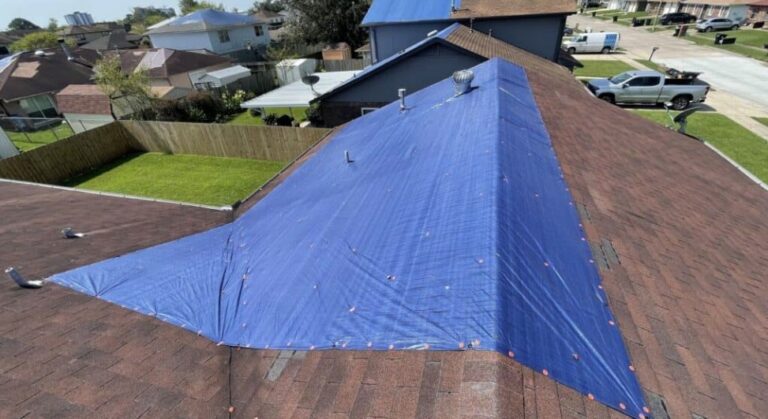
The temporary cover
If the roof is open, a tarp goes on first so water doesn't turn one damaged area into several.
Emergency roof tarping
Dayton Storm Damage
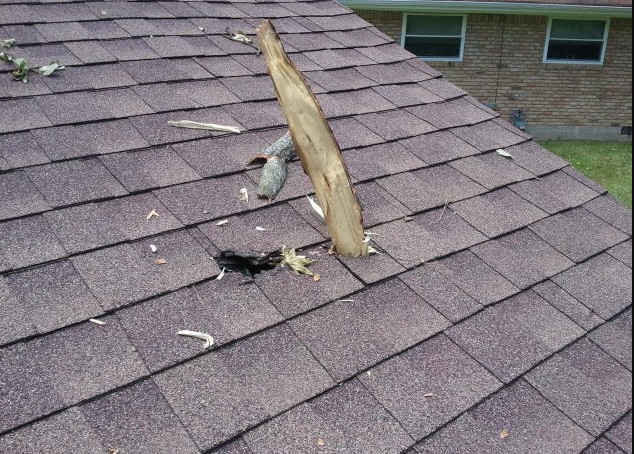
A limb strike damages more than the hole you can see, and less than a contractor hoping for a full roof will tell you.
Not urgent? Schedule a free damage assessment instead.
After a limb strike
A tree is the one storm event that doesn't stay in its lane. Wind takes shingles. Hail bruises them. A limb comes through the roof, tears the gutter off the fascia on the way down, scrapes the siding, and sends force into framing several feet from anything you can see from the driveway.
That's why tree damage gets assessed differently from other storm claims, and why a patch over the hole is often the wrong answer in both directions.
We repair tree damage throughout Dayton, Kettering, Centerville, Beavercreek and Springfield.
Before anything else
Tree removal is a different trade, with different equipment and different insurance. Before any exterior repair starts, the tree or limb has to come off safely, and that's a tree service's job.
What we do is everything after: assess what it actually damaged, document it properly for your claim, get a tarp on if the roof is open, and carry out the repair once the site is clear.
If you don't already have a tree service, say so when you call. We'll tell you what has to happen and in what order.
Open roof
An open roof needs covering before anything else is decided. That's a separate job from the repair, it happens first, and it's what stops a one-room problem becoming a four-room one. Everything below is what happens after the tarp goes on.
Impact extent
The hole is the part everyone photographs. It's rarely the whole story, and it's rarely the whole roof either. Select each zone to see what we check.
Repair needed
At the impact. The obvious part: punctured decking, broken shingles, the hole everyone photographs. It's real damage, and it's the smallest part of the job.
Check past the hole
Beyond the opening. Decking cracked well past the visible hole, and shingles lifted where the limb dragged before it stopped. A patch sized to the hole misses this.
Check the rafters
Through the framing. Force travels down the rafter the limb landed on. Cracks and split fasteners can sit several feet from anything visible from the ground, and we repair them as part of the job.
Sound roof
Where the damage stops. The part nobody shows you: sound decking and intact framing outside the impact zone. A limb strike is rarely a whole-roof event, and we'll show you where the damage ends.
Every system
Wind and hail damage one system at a time. A falling limb goes through several on its way to the ground, and every one of them is part of the repair.
Your claim
Tree damage is sudden, which is why it's treated differently from gradual wear. What decides how a claim goes is what got recorded before anything was moved or covered.
We photograph and document the damage as part of the assessment and provide that record for your claim. We don't handle your claim and we won't tell you what your policy covers; that's between you and your carrier. Our insurance claims and storm damage repair pages explain how we work alongside it.
If the roof is open, a tarp goes on first so water doesn't turn one damaged area into several.
Emergency roof tarping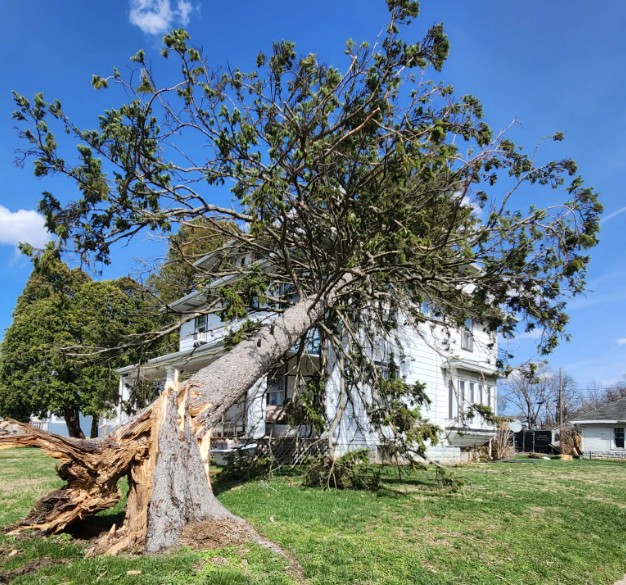
A snapped trunk can take out the roofline, the gutters and the wall below them at once. This is where assessing every system, not just the roof, matters most.
Roof repair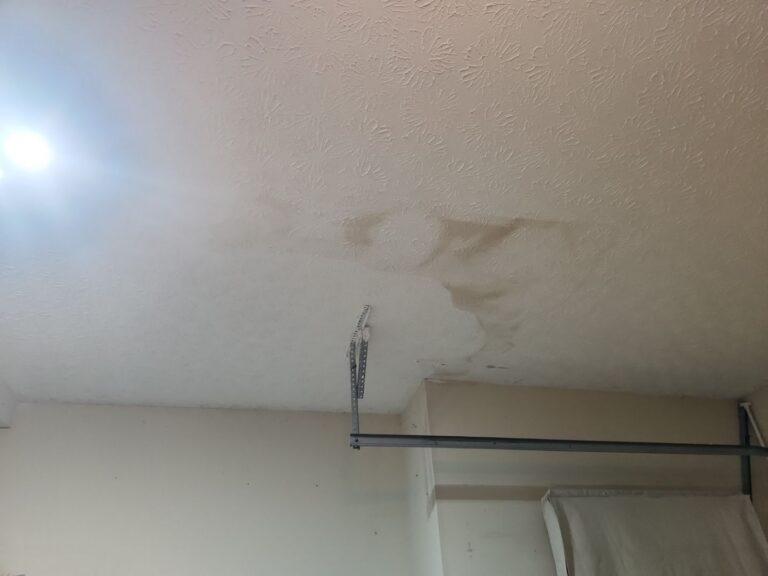
Ceiling stains after an impact usually mean water got past the roof before it was covered. It belongs in the same record.
Insurance claimsProcess
Eight steps, in the order a tree strike actually has to be handled.
Step six deserves its own sentence: an honest boundary on the damage is worth more to you than an inflated one, because it's the part an adjuster can verify.
Local conditions
Most trees that come down in Southwest Ohio don't fail in the strongest wind of the year. They fail in a moderate wind after days of rain, when the ground no longer holds the root plate. Older neighbourhoods with mature canopy see it most, and the same storm that drops one limb often loosens others.
Why AlphaOne
Financing options are available through Synchrony, and repairs are covered by the AlphaOne Advantage Warranty.