
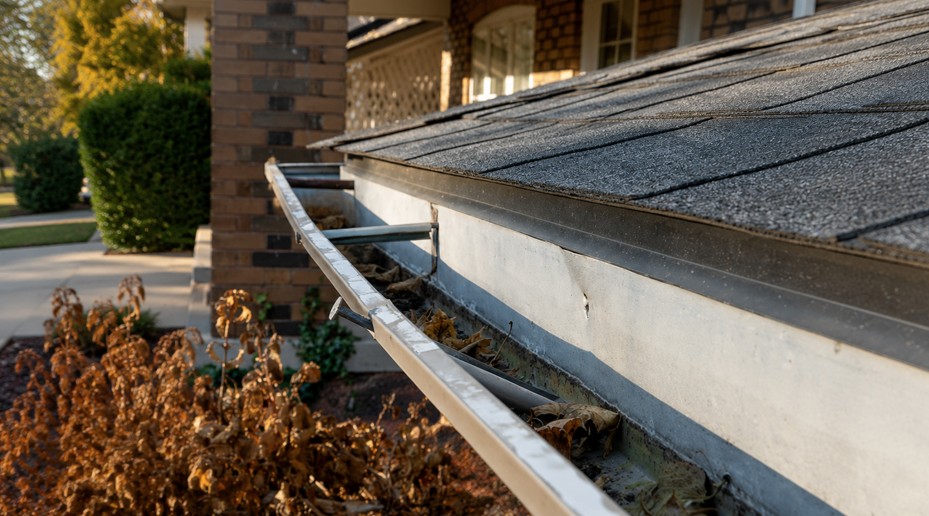
Old white gutter sagging away from a weathered, discoloured fascia board along a shingled roof edge on a home in Kettering, Ohio

Dayton Gutter Services

Gutter Replacement in Dayton, Ohio

When gutters start pulling away from the fascia, the problem usually isn't the gutters. We'll tell you what's actually failing.

  • Serving Dayton since 2012
  • Fully insured
  • AlphaOne Advantage Warranty
  • Free gutter assessment
2012
Serving Dayton since
150+
Five-star Google reviews
4
Profiles and sizes we install
FREE
Assessment, no obligation

Gutters

Gutter replacement in Dayton

A gutter that's pulling away from the house is rarely failing on its own. Fasteners work loose because the fascia behind them has softened, and fascia softens because water has been getting behind the gutter — often for years.

That's why replacing the gutter without looking at what it's fastened to tends to buy a couple of seasons rather than a couple of decades. The new run looks right on the day it goes up, and then it starts moving again.

We replace gutters throughout Dayton, Kettering, Centerville and Beavercreek, and the assessment covers the fascia and roofline as well as the gutter itself.

We also handle fascia and soffit repair, storm damage restoration, and the full range of gutter services.

  • 01 Full gutter system replacement
  • 02 Seamless gutter installation
  • 03 5″, 6″ and 7″ K-style profiles
  • 04 Half-round profiles
  • 05 Downspout replacement and rerouting
  • 06 Hanger and fastener replacement
  • 07 Fascia repair where needed
  • 08 Drainage routed away from the foundation

Diagnostics

What we look for at the roofline

Three of the things we find most often on a gutter assessment, and what each one usually tells us before anything comes down.

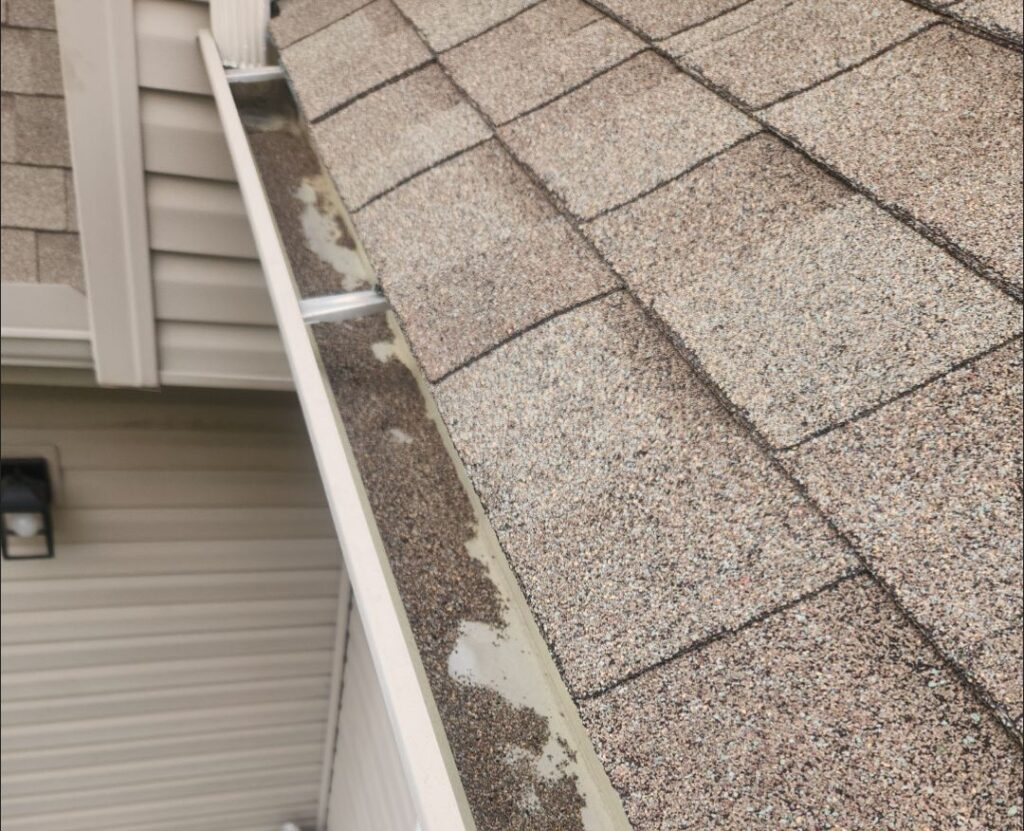
Roof wear Shingle granules collected in the bottom of a gutter trough beside asphalt shingles on a home in Dayton, Ohio

Granules settling in the trough

Asphalt shingles shed granules as they age, and the gutter is where they end up. A gritty layer in the bottom of the channel is telling you something about the roof as much as the gutter — and it is weight the hangers carry every day of the year.

Roof inspection
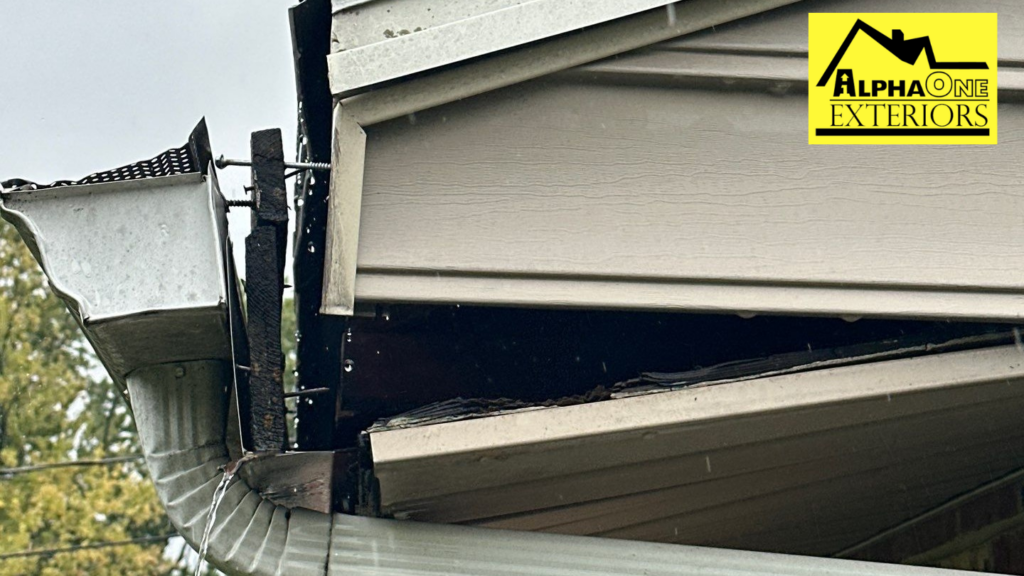
Separation Gutter torn away at a roof corner with the fascia and soffit trim separated on a home in West Carrollton, Ohio

Gutter and trim pulling apart

When a gutter separates at a corner it usually takes the fascia and soffit trim with it. What sits behind that joint is the real question, and it is the part that decides whether a new gutter will hold or repeat the same failure.

Fascia and soffit repair
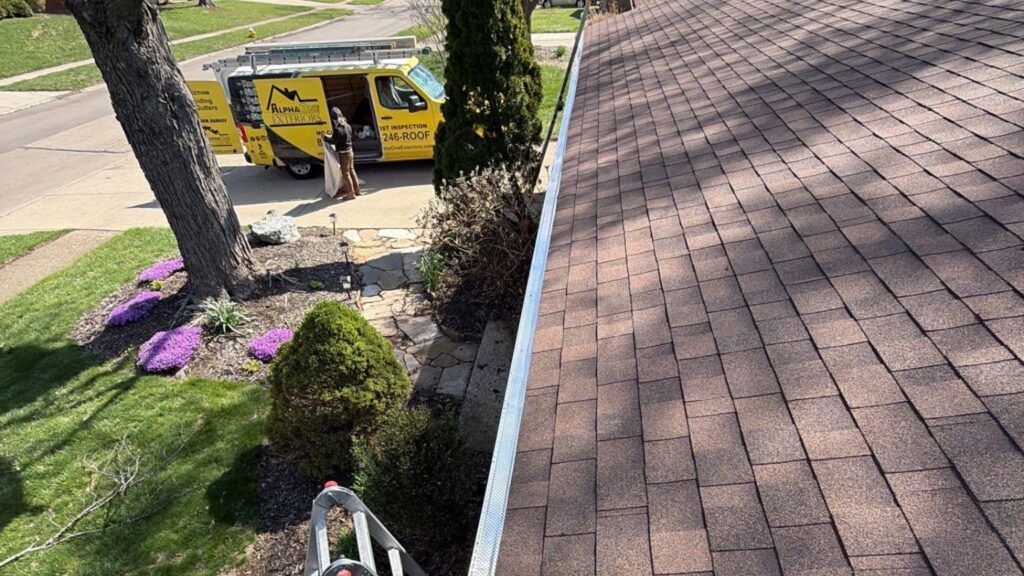
Finished work Gutter running straight along a shingled roof edge with an AlphaOne Exteriors truck parked at the kerb in Kettering, Ohio

A run that sits where it should

A correctly sized gutter, hung at the right pitch on sound fascia, is unremarkable to look at. That is rather the point. Most of the work that makes it last happened before the new run ever went up.

All gutter services

The decision

When repair stops being worth it

Not every failing gutter needs replacing. A repair is often the honest answer, and we will say so. Here is roughly where the line sits.

Repair

Usually enough when

  • One section is loose or leaking
  • Fasteners have worked loose but the fascia behind them is sound
  • A single seam or joint is failing
  • The damage came from one storm
  • The existing size handles your roof
Replace

Usually better when

  • Gutters are pulling away in several places
  • The fascia behind them has softened
  • Seams are failing along the run
  • The system is simply at the end of its life
  • Overflow happens even when they're clean

Sizing

What size do you actually need?

Gutter size is the one decision you get to make during a replacement, and the one most homeowners are never offered. An undersized gutter overflows no matter how clean it is. Select a profile to see what it suits.

5" K-STYLE 6" K-STYLE 7" K-STYLE 6" HALF-ROUND

Common default
Five-inch K-style. The standard residential size and adequate for a great many roofs. It is also the size we most often find already failing on homes with large or steep roof areas — not because it was hung badly, but because it was never sized for that roof in the first place.

The usual step up
Six-inch K-style. A noticeably larger cross-section than the five-inch, and the size most worth considering on bigger roof areas, steeper pitches, or anywhere overflow has been a recurring problem even when the gutters are clean.

Large roofs
Seven-inch K-style. Built for large roof areas and long uninterrupted runs. Less common on residential work, but it exists for a reason, and we install it where the roof genuinely calls for it rather than as an upsell.

A different profile
Six-inch half-round. A different shape rather than simply another size. It's the same width across the top as a 6-inch K-style, with a shallower, rounded trough. Traditional appearance, a smooth interior with no sharp internal corner, and often the right call on a period home where a K-style would read as wrong.

Local conditions

Why gutters fail in Dayton

Ice is the specific problem here. Water that backs up and freezes in a trough adds weight the hangers were never sized for, and it does it repeatedly through a Southwest Ohio winter. Combined with granules from an ageing roof settling in the channel, a gutter can be carrying substantially more than it looks like it is — which is what eventually pulls fasteners through softened fascia.

Freeze-thaw
Ice dams
Heavy rain
Leaf load
Roof granules
Fastener fatigue

Process

Our gutter replacement process

Ten steps, in order. The first four happen before anything comes down off the house.

01
Full roofline assessmentGutters, fascia, soffit and drainage, on every elevation rather than only the run you called about.
02
Check the fascia condition behind the guttersNew gutters fastened into soft fascia will pull away again, and that is the single most common reason a replacement fails early. It is why this comes second rather than last.
03
Assess roof area and pitchSo the size is chosen for your roof rather than copied from whatever was already there.
04
Review profile and colour optionsK-style or half-round, the size, and the finish.
05
Remove the existing systemGutters, downspouts and the old hangers and fasteners.
06
Repair or replace failed fasciaBefore anything new is hung on it.
07
Install hangers at the correct spacingSpacing is what carries the load when a trough fills with ice.
08
Install the new gutter systemSeamless runs, pitched to the outlets.
09
Install and route downspoutsDischarging clear of the foundation rather than beside it.
10
Water-test and walkthroughWe run water through the system with you there before we call it finished.

The contractor

Why homeowners choose AlphaOne

01We check the fascia firstThe board behind the gutter is what a replacement depends on. We look at it before we quote, not after we've started.
02Sized to your roof, not a defaultRoof area and pitch decide the size. We don't simply match whatever was on the house before.
03Seamless installationContinuous runs with joints only where the roofline requires them, in K-style and half-round profiles.
04Drainage routed away from the foundationA gutter that empties beside the house has moved the problem rather than solved it.
05Warranty-backed workmanshipEvery installation is covered by the AlphaOne Advantage Warranty.
06Local since 2012We've served Dayton-area homeowners since 2012 and we plan to be here long after your project is finished.

Interest-free financing options are available on gutter projects, and every installation is covered by the AlphaOne Advantage Warranty.

Gutter Replacement FAQs

It depends far more on the fascia and the fasteners than on the gutter itself. Aluminium seamless gutters commonly give two decades or more of service when they are correctly sized, hung at the right spacing, and fastened into sound wood. On a house where the fascia has already softened, the same gutter can start pulling away in a fraction of that time. When we assess a roofline in Dayton we are really assessing what the gutter is attached to.

Repair is usually the right answer when the problem is contained: one loose section, a single failing seam, storm damage in one place, or fasteners that have worked loose while the fascia behind them is still solid.

Replacement usually makes more sense when gutters are pulling away in several places, when the fascia behind them has softened, when seams are failing along the run, or when the system overflows even after it has been cleaned. That last one often means the gutter was undersized for the roof from the beginning, and no repair fixes that.

Roof area and roof pitch are what decide it, not what happened to be on the house before. Five-inch K-style is the common residential default and suits many roofs. Six-inch has a noticeably larger cross-section and is the usual step up for bigger or steeper roofs, or where overflow keeps happening. Seven-inch exists for large roof areas and long runs and is less common residentially. We measure the roof and tell you which one the house actually calls for.

K-style is the profile most people picture: a flat back, a decorative front face, and a squared-off channel. Half-round is a semicircular trough with a smooth interior and no sharp internal corner.

They are different shapes rather than different grades. Half-round is often chosen on period and traditional homes where a K-style front profile would look out of place. We install both.

A seamless gutter is formed as one continuous length for each run, so the only joints in the system are at corners, end caps and downspout outlets. Conventional sectional gutter is assembled from short lengths joined every few feet, and every one of those joints is a place that can eventually leak. Fewer joints is the whole advantage. We install seamless gutter systems in both K-style and half-round profiles.

Almost always because of what is behind them rather than the gutter itself. Water gets in behind the gutter, the fascia board absorbs it, the wood softens, and the fasteners lose their grip. Add the weight of ice through a Southwest Ohio winter and shingle granules settling in the channel, and the fasteners slowly work their way out of wood that can no longer hold them. This is why we look at the fascia before quoting anything.

Sometimes, and it is one of the first things we check. If the fascia behind the existing gutter is sound, it stays. If it has softened where the fasteners sit, it needs repairing or replacing before the new gutter goes up — otherwise the new system is being hung on the same failure that ended the old one. We will show you what we find rather than simply adding it to a quote.

It varies with the total length of the run, the number of storeys, the profile and size you choose, the number of downspouts, and whether any fascia repair is needed. We are not going to publish a figure that will be wrong for your house.

AlphaOne has previously written about what drives seamless gutter costs in Southwest Ohio, and the free assessment ends with a written estimate for your specific roofline. Financing options are available.

Most single-family homes are a one-day job: tear off the old system in the morning, hang the new one the same day. It runs longer when fascia has to be repaired or replaced first, when the house has a complicated roofline with many corners, or when downspout routing needs reworking. We will tell you which of those applies to your house before we start rather than on the day.

Yes. Gutter replacement is not weather-dependent in the way roofing or painting is — there is no adhesive or coating that has to cure at a particular temperature. What winter changes is access and safety: ice on the roof edge or high winds will move a job, and heavy snow load has to come off before anyone works underneath it. If a gutter is failing in December, waiting until spring usually costs you more in water damage than it saves.

More than most houses have, is the honest answer. Downspout count depends on the length of each run and how much roof drains into it; a long run with a single outlet at one end will back up at the far end no matter how well the gutter is sized. We work it out per elevation during the assessment and tell you where the outlets should go and why.

No. It is entirely a design choice. Most homeowners match the gutter to the fascia or trim so the run visually disappears, but matching the roof or picking a deliberate contrast are both legitimate. We will go through the available colours with you before ordering, and if you are also planning siding work it is worth deciding both at once.

No. This is worth being direct about, because it is often implied otherwise. An ice dam forms when heat escaping into the attic melts snow on the upper roof, the meltwater runs down to the cold eave and refreezes. That is an insulation and ventilation problem in the roof assembly. Gutters neither cause ice dams nor prevent them.

What gutters do is suffer from them. A trough that fills with ice carries weight the hangers were never sized for, which is a common reason a gutter ends up pulling away. Replacing the gutter fixes the gutter. Fixing the ice dam means addressing attic insulation and ventilation, and a roof inspection is the right place to start.

Yes. Gutter installations are covered by the AlphaOne Advantage Warranty, which covers our workmanship. Manufacturer coverage on the gutter material and the finish is separate and comes from the manufacturer. We will explain which is which in writing rather than leaving you to work it out later.

We'll tell you what's actually failing

A full roofline assessment, an honest read on repair versus replacement, and a clear written estimate either way.

Schedule Free Gutter Assessment

AlphaOne Exteriors · Dayton, Ohio · Since 2012

Gutter replacement · Free estimate, no pressure
Schedule Free Gutter Assessment