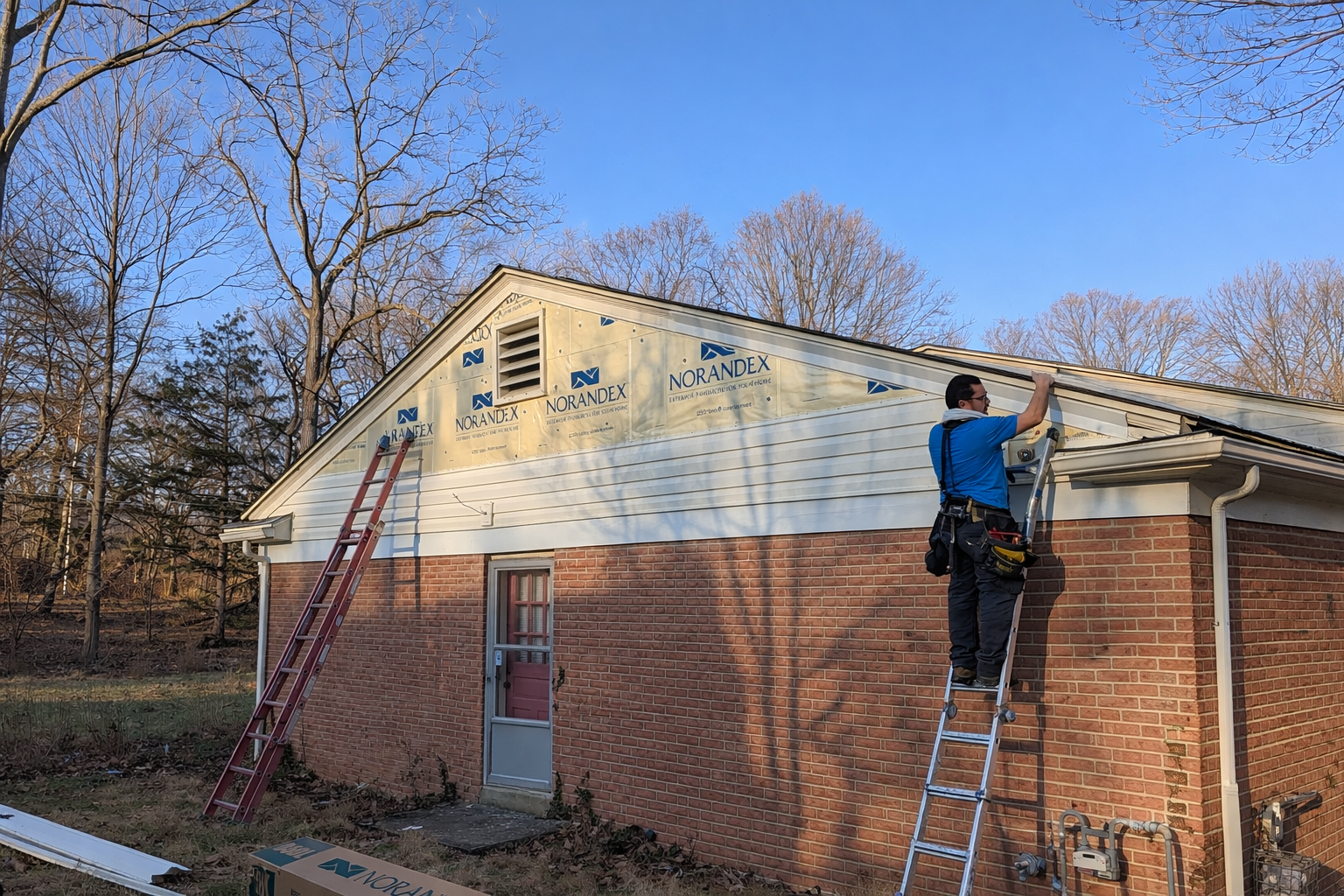
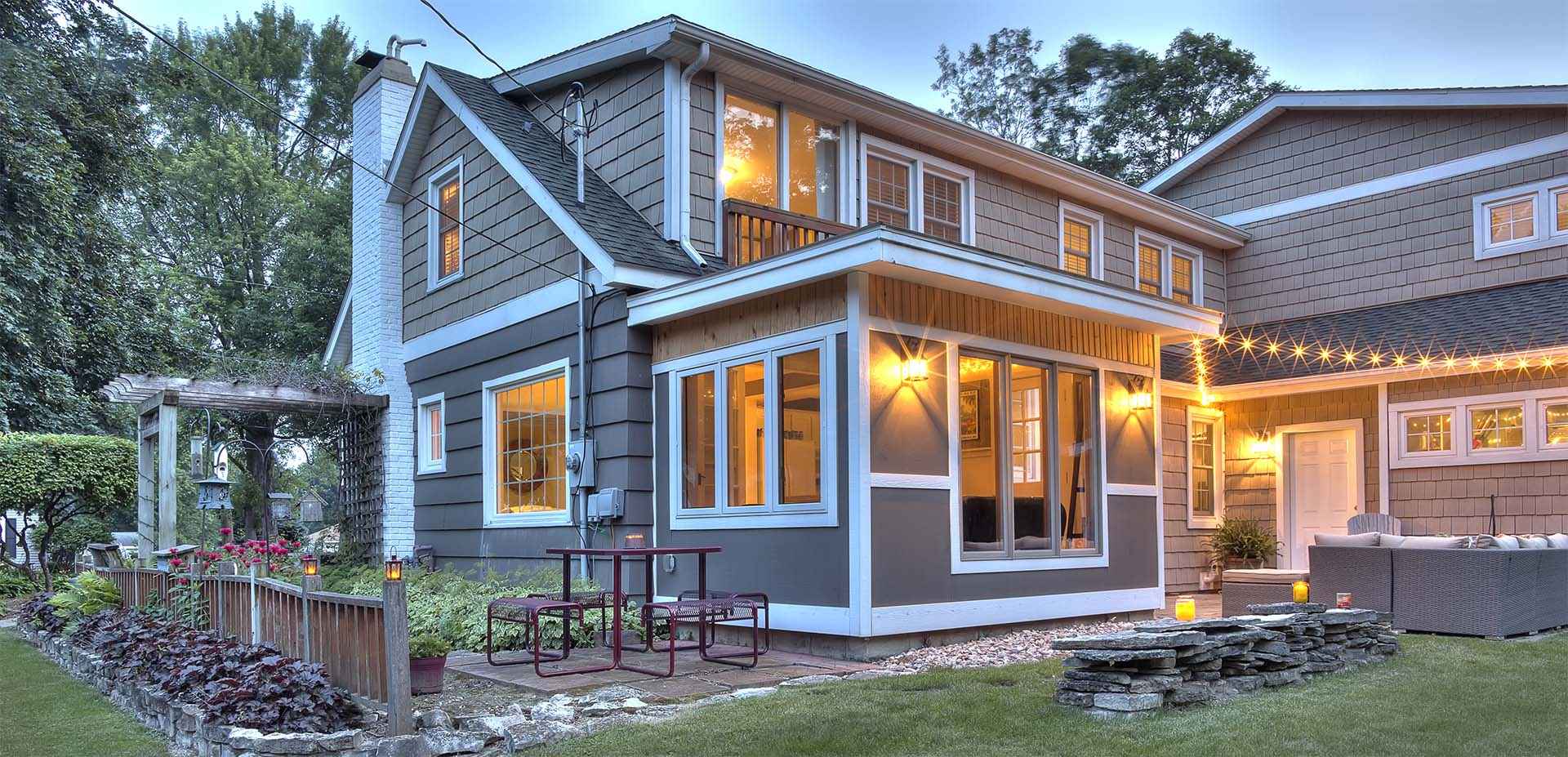
Home exterior with vinyl siding in the Dayton, Ohio area

Dayton Siding Services

Vinyl Siding Replacement in Dayton, Ohio

New siding is only as good as the wall system behind it. We inspect both — then install to VSI standards.

  • VSI Certified Installer
  • Serving Dayton since 2012
  • Licensed & insured
  • AlphaOne Advantage Warranty
2012
Serving Dayton since
150+
Five-star Google reviews
20–40
Year service life, quality vinyl
VSI
Certified installation standard

What's included

Professional vinyl siding replacement in Dayton

When vinyl siding reaches the end of its service life, replacing it does more than change how your home looks. It restores the weather barrier protecting everything underneath.

AlphaOne Exteriors provides complete vinyl siding replacement for homeowners throughout Dayton, Kettering, Centerville, Beavercreek, and surrounding communities.

Every project starts with an exterior inspection. If a targeted repair would serve you better than a full replacement, we'll tell you that.

  • 01 Full siding removal and replacement
  • 02 Wall sheathing inspection
  • 03 House wrap replacement when needed
  • 04 Trim replacement
  • 05 Fascia and soffit replacement
  • 06 Window and door trim
  • 07 Flashing upgrades
  • 08 Weather-resistant barrier improvements
VSI
Certified Installer

The Vinyl Siding Institute is the industry body for vinyl siding products, installation standards, and contractor education. Its certification tests installers against documented practice, not regional habit.

Credentials

Most homeowners have never heard of VSI. That's why it's worth understanding.

Even high-quality vinyl siding underperforms when installed incorrectly. Certification covers the details that decide whether siding performs for decades or fails in five years:

  • Fastening technique and nail placement
  • Expansion and contraction requirements
  • Flashing integration at openings
  • Weather-resistant barrier installation

Done right, this is what prevents buckling, warping, loose panels, and water intrusion behind the siding. See our full credentials on the certifications and trainings page.

Assessment

Is it time to replace your vinyl siding?

One or two of these usually points to a repair. Several at once — especially across more than one elevation — generally means replacement is the better long-term investment.

Cracked or split panels
Warped or buckling siding
Panels pulling away from the home
Siding gone brittle with age
Hail damage
Wind damage or missing panels
Significantly faded color
Frequent repairs
Moisture intrusion
Mold or mildew growth
Higher energy bills
Siding is discontinued
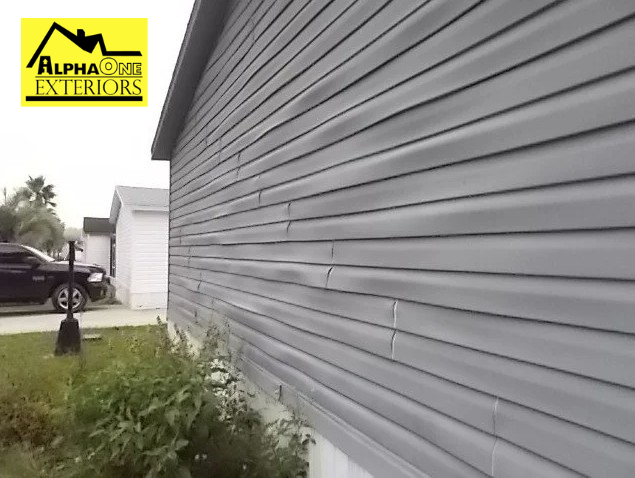
Thermal movement Warped and buckling vinyl siding on a home in Dayton, Ohio

Warped or buckling panels

Vinyl expands and contracts with temperature. When panels were fastened too tightly at installation, or the material has aged past its flexible life, that movement shows up as waves that won't relax.

Why siding warps in Ohio
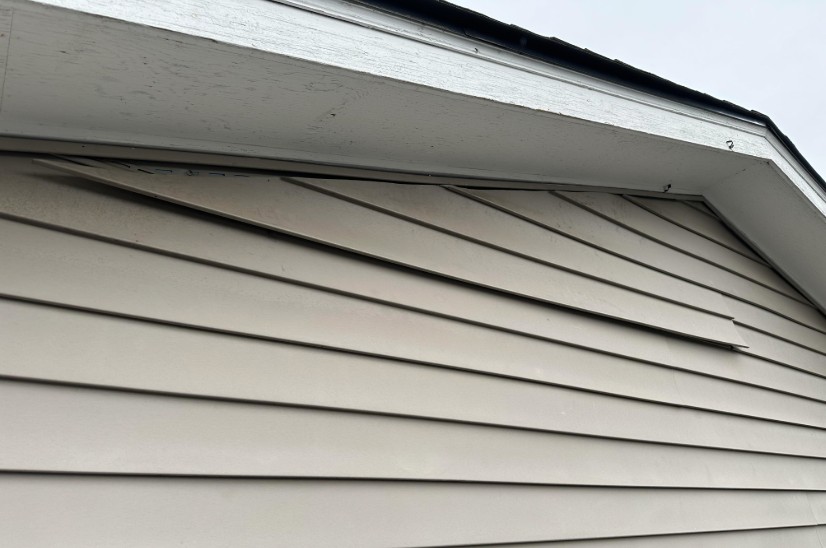
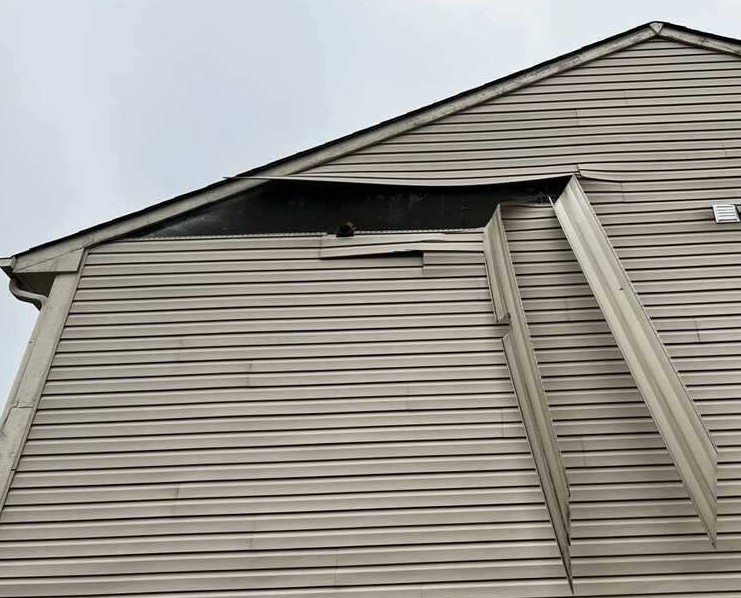
Wind uplift Loose vinyl siding panels detached from a home in Dayton, Ohio

Loose or detached panels

Panels that have come unlocked from their neighbors leave the wall assembly exposed to wind-driven rain. After a storm this is common, and often more widespread than it looks from the ground.

Loose siding after a storm
Storm impact Wind damaged vinyl siding pulled loose on a home in Springboro, Ohio

Storm and wind damage

High winds tear panels off entirely or break the locking edge that holds a course in place. If a storm hit your home, the siding deserves the same inspection the roof gets.

Storm damage restoration

Decision

Repair or replace?

We give an honest read either way. If a repair will hold, that's what we'll recommend.

Repair

Usually best when

  • Damage is localized
  • Matching siding is available
  • One storm-damaged section
  • Panels remain flexible
  • Moisture hasn't reached the wall assembly
vs
Replace

Usually best when

  • Damage is widespread
  • Your siding profile is discontinued
  • Multiple elevations are damaged
  • Siding has become brittle with age
  • Moisture intrusion or hidden damage is present

Section detail

What's behind your siding matters as much as the siding

Removing old siding is the only time anyone gets a clear look at the wall assembly. Select a layer to see what we inspect — and what we find.

04 FRAMING & AIR SEALING 03 SHEATHING 02 HOUSE WRAP 01 VINYL SIDING

What we check. The visible layer, and the only one most contractors quote on. Course alignment, locking edges, and expansion gaps.

What we find. The weather-resistant barrier. Worn, torn, or missing wrap is one of the most common things we uncover once old siding comes off, and it gets replaced.

Where the money hides. Rotted or soft sheathing has to be repaired before new siding goes on. This is a common reason two quotes for the same house differ by thousands.

The opportunity. Insect damage, air leaks around windows and doors, and areas that would benefit from insulation. With the wall open, this is the moment to address them.

New siding is only as good as the wall system behind it. It's also one of the biggest reasons two siding quotes for the same house can differ by thousands. Why siding quotes vary

Sequence

Our replacement process

Ten steps, in order. Step four is the one most homeowners never get to see, and the one that separates a real quote from a guess.

01
Complete exterior inspectionSiding, trim, and visible moisture indicators.
02
Review siding optionsProfiles, colors, and product lines.
03
Remove existing siding
04
Inspect wall sheathingThe step most homeowners never get to see.
05
Repair damaged substrateWhere needed.
06
Install or upgrade the weather-resistant barrier
07
Install flashingAround windows, doors, and penetrations.
08
Install the new vinyl siding systemTo manufacturer and VSI standards.
09
Install trim, soffit, and fasciaAs needed.
10
Final walkthrough

Profiles

Choosing the right siding style

Each profile casts a different shadow line. We'll walk you through which suits your home's architecture — in person, not on a sample board.

Traditional lap

The most common horizontal profile. Clean, familiar lines that suit most Dayton-area homes, and the safest choice if you're matching a neighborhood look.

Dutch lap

A horizontal profile with a decorative groove along the top edge, creating a deeper shadow line and more visual texture than standard lap.

Board & batten

Vertical panels with raised battens at the seams. Increasingly popular on farmhouse-style homes, and effective as an accent on gables and entryways rather than a full wrap.

Shake & shingle

Mimics cedar shake without the maintenance. Most often used on gables, dormers, and accent walls rather than an entire elevation.

Vertical

Vertical panels that draw the eye upward and can make a low, wide home read taller. A good option when you want a modern departure from horizontal lap.

Material comparison

New vinyl, or upgrade to James Hardie®?

Both are excellent products. The right choice depends on your home's needs, your budget, and how long you plan to stay. We don't push one.

Attribute
Vinyl siding
James Hardie®
Initial investment
Lower
Higher
Appearance
Excellent
Premium
Durability
Very good
Excellent
Impact resistance
Good
Excellent
Fire resistance
Standard
Noncombustible
Maintenance
Low
Low
Color options
Extensive
Extensive
Long-term performance
Excellent
Excellent

Why many homeowners choose new vinyl

Lower upfront investment. Low maintenance. A wide variety of colors and profiles. Won't peel the way traditional paint does. Excellent value, and it performs well in Ohio when properly installed.

Why some upgrade to James Hardie®

Premium appearance. Outstanding durability. Better impact resistance. Noncombustible material. Resists rot and pests. Strong performance in Ohio weather, and a long-term investment in the home.

Outcome

What new siding actually changes

01Improved curb appealThe single most visible exterior change you can make to a home.
02Lower maintenanceNo painting, no staining, no annual sealing. An occasional wash.
03Better weather protectionA restored barrier against wind-driven rain, snow, and freeze-thaw.
04Improved energy efficiencyInsulated vinyl is available, and air sealing while the walls are open compounds the benefit.
05Increased home valueAmong the stronger exterior improvements for resale and listing photos.
06Colors & stylesDozens of colors across five profiles, seen against your roof and trim in daylight.

Local conditions

Why Ohio weather is tough on vinyl

Freeze-thaw
High winds
Hailstorms
UV exposure
Heavy rain
Thermal movement

Southwest Ohio puts vinyl through a full range of thermal movement every year. A panel installed on a 90-degree July afternoon sits at a different length than the same panel in January. That's why fastening technique and expansion allowances — the specifics VSI certification covers — matter more here than in milder climates. It's also worth asking any contractor about before work starts. How to choose a siding contractor

The contractor

Why homeowners choose AlphaOne

01VSI certified installersCertified to the vinyl siding industry's documented installation standard.
02Honest repair vs. replacementIf a repair will hold, we say so. We don't default to the bigger job.
03Vinyl and fiber cementWe install both, so the recommendation isn't driven by what we stock.
04Flashing & weatherproofingThe details that don't show once the job is done, done properly.
05Warranty-backed workmanshipCovered by the AlphaOne Advantage Warranty.
06Local since 2012Dayton-based, BBB accredited, fully insured.

Interest-free financing options are available on siding projects, and every installation is covered by the AlphaOne Advantage Warranty.

Vinyl Siding Replacement FAQs

Quality vinyl siding typically lasts 20 to 40 years, depending on the product, the quality of installation, and how much sun and weather exposure the elevation gets. South- and west-facing walls usually show age first.

Widespread cracking, warping, brittleness, repeated repairs, or any sign of moisture reaching the wall assembly generally points to replacement. Isolated damage on otherwise sound siding is usually repairable. An inspection is the only reliable way to tell.

Often, yes — if the damage is localized and we can source matching panels. Discontinued profiles are the common obstacle. We’ll always tell you when a repair is the better value.

Yes. Partial replacement is common after storm damage. The trade-off is color match: new panels rarely match sun-faded existing siding exactly, even in the same color. We’ll show you what to expect before you decide.

When it’s needed, yes. Removing the old siding is when we can actually see the condition of the weather-resistant barrier, and worn or missing wrap gets replaced as part of the project.

Yes. Insulated vinyl siding is available, and rigid foam insulation can be added during installation. Both improve energy efficiency and give the finished siding a more solid feel.

Dozens of colors and profiles across the product lines we install. We’ll bring samples so you can see them against your roof, trim, and brick in natural light rather than choosing from a screen.

Siding replacement is consistently among the stronger exterior improvements for resale, both for the value recovered and for curb appeal on listing photos. The specific return depends on your home and local market.

It can, particularly with insulated siding or added rigid foam, and especially when we address air leaks around windows and doors while the walls are open. Siding alone is a modest improvement; siding plus air sealing is a meaningful one.

Most single-family homes take several days to about a week, depending on size, complexity, how much trim work is involved, and how much substrate repair we find once the old siding is off. Weather can extend it.

Yes, when it’s properly installed. The failures we see in Southwest Ohio are usually installation-related — panels fastened too tightly to allow for expansion, or flashing that doesn’t direct water away from openings — rather than the product itself failing.

It depends on the cause. Sudden damage from wind or hail is often covered; gradual wear, fading, and age are not. We document damage thoroughly and have extensive experience working with homeowners through the claims process.

In Southwest Ohio, vinyl siding typically runs in the range of $8 to $12 per square foot installed, including materials, labor, tear-off, and basic trim work. Home size, complexity, number of existing siding layers, and any substrate repair all move that number. See our full siding cost breakdown, or schedule a free estimate for a firm price on your home.

Very little. An occasional wash to remove dirt and mildew, plus a look at caulking around windows and doors. No painting, no staining, no annual sealing.

For homeowners planning to stay long-term who want a premium look, better impact resistance, and a noncombustible material, it often is. For those prioritizing upfront cost and low maintenance, quality vinyl is excellent value. Neither is the right answer for everyone.

Start with how long you plan to stay, your budget, and your home’s architecture. We’ll walk you through both, including where the extra investment in fiber cement does and doesn’t pay off. We don’t push one product.

We'll tell you what your walls actually need

Free inspection, honest read on repair versus replacement, and a written estimate that accounts for what's behind the siding.

Schedule Free Siding Estimate

AlphaOne Exteriors · Dayton, Ohio · VSI Certified · Since 2012

Vinyl siding replacement · Free estimate, no pressure
Schedule Free Siding Estimate