The condition
Where the job starts
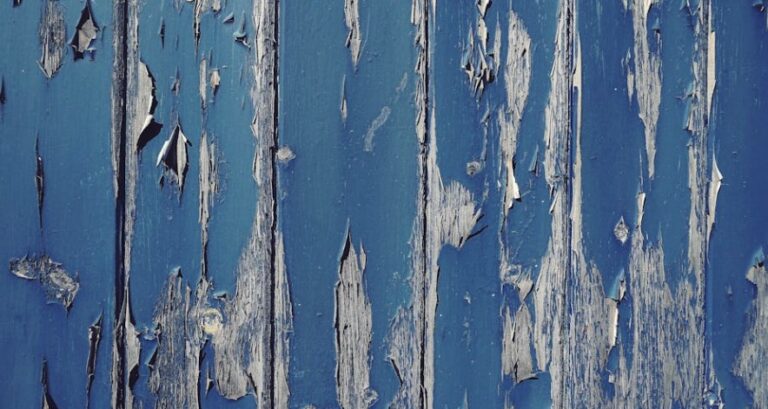
Paint lifting in sheets and bare wood underneath. By this point the coating has stopped protecting the wood, and the wood has started taking water.
Why exterior paint peels
Dayton Painting Services
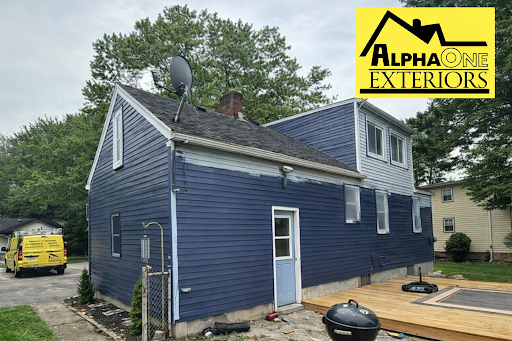
A repaint is mostly preparation. Seven of the nine steps happen before anyone opens a can of paint.
Whole-house repainting
A house is not one surface. It's siding, trim, fascia, soffit, brick, a front door and a set of shutters, and each of those wants something different from a coating. A crew that treats the whole thing as one job is why some repaints look tired within a few seasons while others still look right years later.
What decides that is preparation, and preparation is invisible once the job is done. That's why it's the first thing dropped from a cheap quote.
We paint exteriors throughout Dayton, Kettering, Centerville and Beavercreek.
One house, four surfaces
Four surfaces meet at almost every corner of a house, and only one of them is a simple decision. Select each to see what it needs.
Paint with confidence
Siding: wood, fiber cement, vinyl. The largest area on the house and the most forgiving, provided it's clean, dry and sound before any coating goes on. Each material has its own prep, and wood siding is where most of that prep happens.
Repair, then paint
Trim, fascia and soffit. Fails first, every time. It's the most exposed, it moves the most, and it's where water finds the end grain. Expect some of it to need repair before it's coated.
Sometimes the answer is don't
Brick and masonry. Painting brick isn't wrong, and done well it can look good. But it is close to irreversible: once masonry is coated, getting back to bare brick is difficult, and the coating needs maintaining from then on. On some wall assemblies, paint also traps moisture that used to escape through the brick. That makes brick a conversation before it's a quote, and sometimes our advice is to leave it alone.
Different product
Doors, shutters and railings. High-touch, high-wear, small area. These fail from hands as much as weather, and they usually want a different product from the walls.
Signs
Paint rarely fails all at once. These are the signs that a coating has stopped protecting the surface underneath it.
Paint lifting in sheets and bare wood underneath. By this point the coating has stopped protecting the wood, and the wood has started taking water.
Why exterior paint peels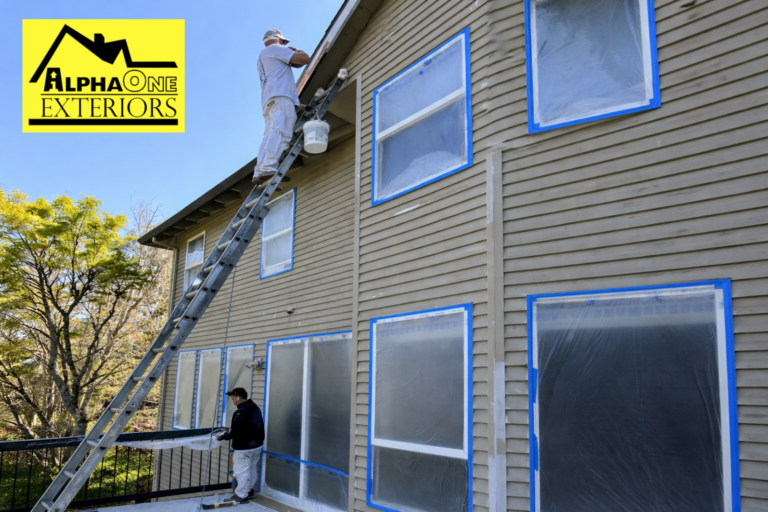
Masking, washing, scraping and repair. None of it shows in the finished photo, and all of it decides how long the finish holds.
See all nine steps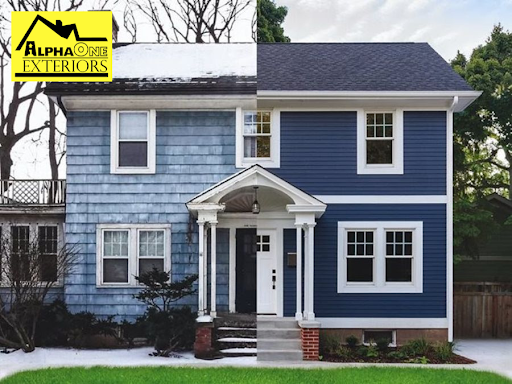
Siding, trim and door done as one project, so every surface ages from the same starting point.
What drives the costLocal conditions
Southwest Ohio moves a house through a full range of expansion and contraction every year, and a coating has to move with it. It also narrows the window when application conditions are actually right. Surface temperature and dew point matter as much as the forecast, which is why we schedule around weather rather than through it. For what happens at the surface when paint lets go, see why paint fails on siding.
Process
Only steps eight and nine involve a finish coat. Everything before that is preparation.
Steps one through seven are the entire difference between a repaint that holds and one that doesn't, and not one of them is visible in a finished photograph. When two quotes differ by thousands, this is usually where.
Surfaces
A whole-house repaint usually touches most of these. Some have their own pages, and our exterior painting services page covers everything we paint.
Paint or stain
Neither is better in general. They do different jobs on different surfaces.
Sits on the surface as a film, offers far more colour choice, and protects longer on siding and trim. It's the right answer for most of a house.
Penetrates the wood, keeps the grain visible, and wears away rather than peeling. It's usually right for decks and fences, which is why we handle those as deck and fence staining.
Products
We use premium exterior coating systems from Sherwin-Williams and Benjamin Moore. How long a finish holds comes down to four things: the exposure, the surface, the quality of the prep, and the grade of the coating.
Why AlphaOne
Financing options are available through Synchrony, and every project is covered by the AlphaOne Advantage Warranty.