
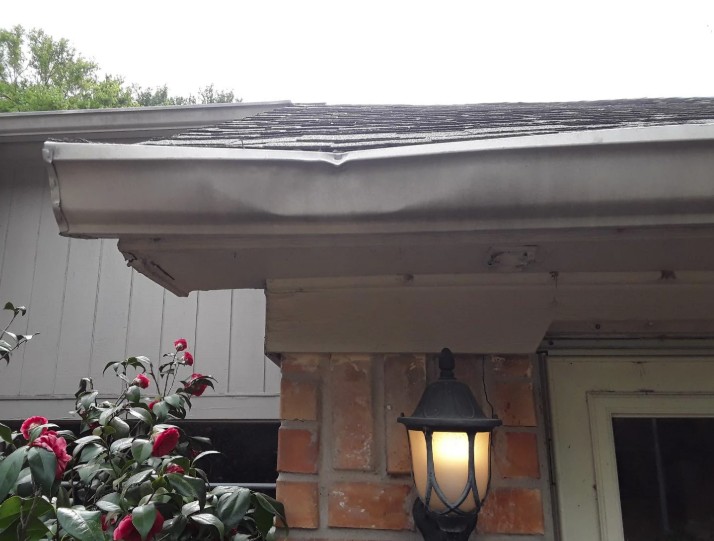
White gutter with a visible dent running along a low roof eave above board-and-batten siding on a home in Dayton, Ohio

Dayton Gutter Services

Gutter Repair in Dayton, Ohio

Most gutter problems are repairs, not replacements. The trick is working out which part of the run is actually failing.

  • Serving Dayton since 2012
  • Fully insured
  • AlphaOne Advantage Warranty
  • Free gutter assessment
2012
Serving Dayton since
150+
Five-star Google reviews
4
Failure points we check
FREE
Assessment, no obligation

Gutters

Gutter repair in Dayton

A gutter that overflows is telling you something is wrong, but not what. The water shows up at the lowest point of the failure, which is often nowhere near the cause — a blocked outlet at one end backs the entire run up, and the overflow appears wherever the run happens to dip.

So the useful question isn't “is my gutter broken”. It's which of four things is failing, because each one has a different fix and only one of them is expensive.

We repair gutters throughout Dayton, Kettering, Centerville and Beavercreek.

We also handle full gutter replacement, fascia and soffit repair, storm damage restoration, and the wider range of gutter services.

  • 01 Rehanging sagging runs
  • 02 Hanger and fastener replacement
  • 03 Seam and end cap resealing
  • 04 Correcting slope and fall
  • 05 Downspout reattachment
  • 06 Outlet and blockage clearing
  • 07 Section replacement
  • 08 Storm and hail damage repair

Diagnostics

What we find on a repair call

Three of the most common things we see at the roofline, and what each one usually means for the run.

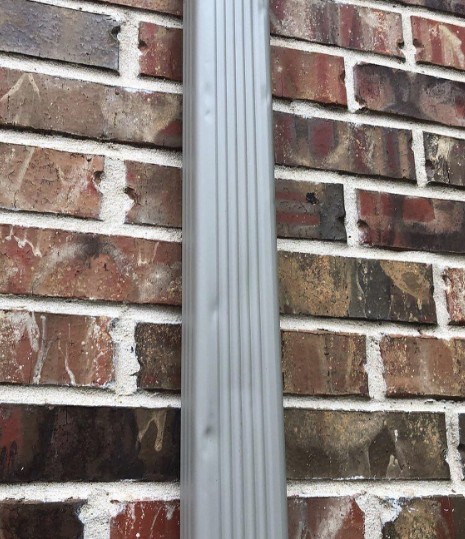
Storm damage Aluminium downspout running down a brick wall on a home in Miamisburg, Ohio, with shallow hail dents across its face

Impact damage to downspouts

Hail and falling debris dent downspouts and troughs, and a bad enough dent restricts flow or splits a seam open. Sudden impact damage is often an insurance matter where gradual wear is not, so it is worth documenting before anything gets repaired.

Storm damage repair
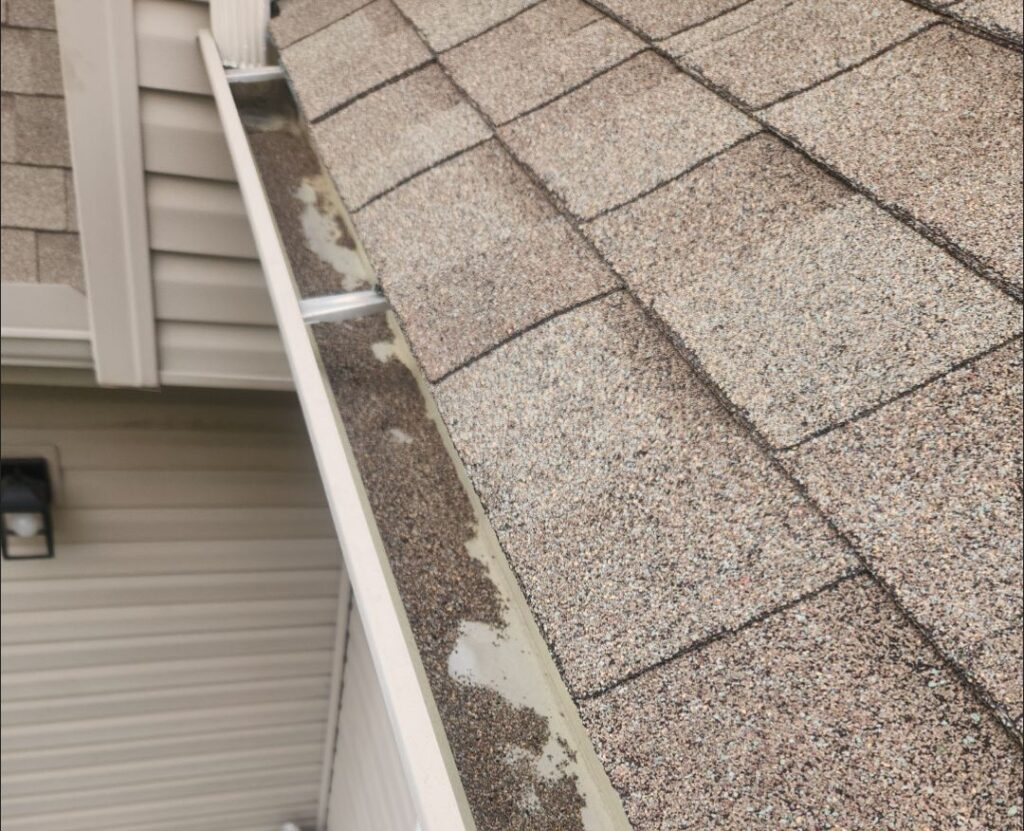
Clog cause Layer of shingle granules sitting in the bottom of a gutter trough on a home in Dayton, Ohio

Granules settling into the low spots

Shingle grit washes into the trough and collects wherever the run does not drain fully. It holds moisture against the metal and adds weight, and it is the most common thing we clear out of a gutter that overflows with no obvious blockage.

Roof inspection
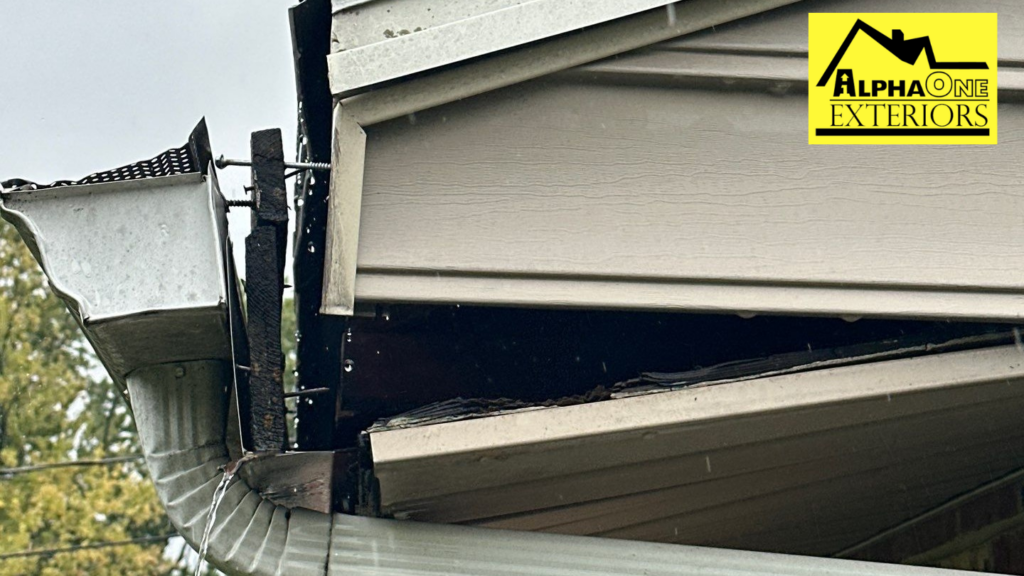
Separation Gutter pulled away at a roof corner with the fascia and soffit trim separated on a home in West Carrollton, Ohio

A corner that has come apart

When a gutter separates at a corner it usually takes the fascia and soffit trim with it. Whether that is a repair depends entirely on the condition of the wood behind it, which is the first thing we check.

Fascia and soffit repair

Diagnosis

Which part is actually failing?

A gutter run has four things that fail, and the symptom rarely appears where the problem is. Select one to see what it does and what it needs.

HANGERS SEAMS & END CAPS SLOPE / FALL DOWNSPOUT & OUTLET

Repairable
Hangers and fasteners. Spikes and hangers work loose over time, the run sags between whatever supports are still holding, and water sits in the dip instead of moving toward the outlet. Rehanging fixes it — unless the fascia behind the fasteners has softened, in which case the wood has to be sorted out first.

Repairable
Seams and end caps. Sealant at joints and corners is the shortest-lived part of a gutter. The tell is that the drip appears below the seam rather than at the end of the run. Reseal, or replace the one section, depending on what the joint looks like once it is opened up.

Repairable
Slope and fall. A gutter has to fall far enough along its length to drain completely between rains. Too little fall and water stands in the trough after every storm, and standing water is what corrodes the metal and adds weight the hangers were never sized for. How much fall a run needs depends on its length and where the outlet sits. Published guidance sets a minimum of 1/16 inch of fall per foot of run. We set it on site and prove it by running water through the finished gutter.

Repairable
Downspout and outlet. A blocked outlet or a detached downspout backs the whole run up, which is why the overflow so often appears at the far end from the actual problem. Clearing, resecuring or rerouting is usually a short job once the cause has been found.

The honest bit

When repair isn't the answer

Most gutter problems are repairs. Three of them are not, and we would rather tell you that at the assessment than after the second invoice.

The fascia behind the gutter has softened

New fasteners driven into soft wood pull out again, usually within a season or two. That is a fascia repair first and sometimes a fascia replacement, and no amount of rehanging substitutes for it. It is also the single most common reason a gutter repair does not hold.

The run is failing in several places at once

Reseal one seam and the next one goes. At that point you are paying repeatedly for the same outcome, and a full gutter replacement usually costs less than the third repair.

The gutters are undersized for the roof

They overflow even when they are clean and correctly hung. No repair fixes that — the cross-section is simply too small for the water the roof delivers, and the answer is a larger profile.

Storm

Storm and hail damage

Dents, detached downspouts, and sections torn loose by wind or falling limbs. Sudden storm damage is often an insurance matter where gradual wear is not, so document it before repairs begin — photographs, and the date.

Dented troughs and downspouts
Downspouts pulled off the wall
Sections torn loose by wind
Hangers bent or sprung
Seams split at the joint
End caps displaced
Outlets crushed or blocked
Impact marks on fascia and trim

We do not handle your claim and we will not tell you what your policy covers — that is between you and your carrier. What we can do is document what we find and repair it properly. See storm damage repair and restoration.

Local conditions

Why gutters fail in Dayton

Standing water is the compounding factor. A run that doesn't drain fully holds water that freezes, and ice is heavy enough to pull hangers that were fine in summer. Granules from an ageing roof settle into the same low spots and hold moisture against the metal. Neither is dramatic on its own; together they are why a gutter that was fine three winters ago isn't now.

Freeze-thaw
Ice load
Heavy rain
Leaf load
Roof granules
Fastener fatigue

Process

Our gutter repair process

Ten steps. The first six are diagnosis, because fixing the wrong thing is the most common way a gutter repair fails.

01
Full roofline assessmentThe whole run, not just the spot where the water shows.
02
Locate the actual causeThe symptom position rarely matches the failure position. A blocked outlet at one end shows up as overflow at the other, so we work back from the water to the cause before touching anything.
03
Check the fascia conditionBehind the fasteners, because that is what decides whether a repair will hold.
04
Check the fall along the runWhere the water sits after rain tells us more than a spirit level does.
05
Clear the outlet and downspoutOften this alone turns out to be the whole job.
06
Give an honest read on repair versus replacementIncluding the cases where replacement is the cheaper answer.
07
Rehang or refasten as neededNew hangers at the correct spacing rather than a fastener back into the same hole.
08
Reseal seams and end capsOr replace the section outright if the joint is past sealing.
09
Reattach or reroute downspoutsDischarging clear of the foundation rather than beside it.
10
Water-test the runRunning water through the repaired section is the only way to prove the fall is right, and it takes two minutes.

The contractor

Why homeowners choose AlphaOne

01We find the cause, not the symptomWater shows up at the low point, not the failure point. Telling the difference is most of the job.
02We recommend repair when repair worksMost gutter problems are repairs, and we say so even though replacement is the bigger invoice.
03Fascia checked before refasteningNew fasteners in soft wood pull out again. We look before we drive anything.
04Every repair water-testedWe run water through the finished run with you there. Two minutes, and it is the only real proof.
05Warranty-backed workmanshipEvery repair is covered by the AlphaOne Advantage Warranty.
06Local since 2012We've served Dayton-area homeowners since 2012 and we plan to be here long after your project is finished.

Interest-free financing options are available on larger gutter work, and every repair is covered by the AlphaOne Advantage Warranty.

Gutter Repair FAQs

Usually, yes. A sag almost always means the hangers have worked loose rather than that the gutter itself has failed, and rehanging the run at the correct spacing brings it back. The exception is when the fascia board behind the fasteners has softened — new fasteners in soft wood pull out again, so the wood has to be dealt with first. That is the one thing we check before quoting a rehang.

Three usual reasons. The run may not have enough fall, so water sits in the trough instead of moving to the outlet and spills over the front edge in heavy rain. The outlet itself may be partly blocked even though the trough looks clear. Or the gutter is simply undersized for the roof area above it, in which case it will overflow whatever you do to it. Working out which of the three it is takes an assessment rather than a guess.

Sealant. It is the shortest-lived component in a gutter system, and joints and corners are where it lives. Temperature swings work the joint open and closed thousands of times a year until the seal gives up. The useful tell is where the drip appears: a seam leak drips below the joint, whereas an overflow spills over the front edge along the run. Resealing is a straightforward repair; if the joint has corroded, we replace that section instead.

There’s no single national code figure — the IRC and IPC defer to manufacturer instructions. The published guidance we work to is a minimum of 1/16 inch of fall per foot of run. In practice we set the fall on site and confirm it by running water through the finished run, because a measurement that looks right on paper can still leave standing water.

It depends on what the dent has done. A shallow dent in the face of a trough or downspout is cosmetic and can often be left or gently worked out. A dent deep enough to restrict the channel, or one that has split a seam or crushed an outlet, needs that section replaced. Hail commonly leaves the first kind; a falling limb usually leaves the second.

Because that stretch of the run is not falling toward the outlet. It might never have been hung with enough fall, or the hangers in that section may have worked loose and let the run sag into a dip. Either way the fix is the same category of work — rehang that stretch so it drains. Standing water matters more than it looks: it corrodes the metal from the inside and it is heavy, which pulls on the hangers that are already struggling.

Yes, and it is one of the more common calls we get after a storm. If the downspout itself is undamaged we resecure it to the wall with new brackets and check the outlet it feeds from. If the straps have torn out of the siding or the elbow is crushed, those parts get replaced. We also take the opportunity to check where it discharges — a downspout that empties beside the foundation has moved the problem rather than solved it.

It depends on what is actually wrong, which is the whole point of the assessment. Clearing an outlet and resecuring a downspout is at one end of the range; rehanging a long run and repairing the fascia behind it is at the other. The number of storeys and the access matter too.

We are not going to publish a figure that will be wrong for your house. The free assessment ends with a written estimate for the specific work, and financing options are available on larger jobs.

Most repairs are a same-day job and many are an hour or two — resealing a seam, clearing an outlet, resecuring a downspout, rehanging a section. It runs longer when fascia has to be repaired before anything can be refastened, or when several stretches of a long run need rehanging. We will tell you which it is at the assessment rather than on the day.

When the fascia behind the gutter has softened badly enough that fasteners will not hold, when the run is failing in several places at once so each repair just moves the problem along, or when the gutters are undersized for the roof and overflow even while clean. Those three are the honest cases for gutter replacement. Everything else is usually a repair, and we will say so.

That is a question for your carrier, not for us, and we will not tell you what your policy covers. What we can tell you is the general shape of it: sudden damage from an identifiable event — hail, wind, a falling limb — is treated differently from gradual wear, which policies typically exclude.

The practical advice is to document it before anyone repairs anything. Photographs, and the date. We can provide a written description of what we find, and we handle the storm damage repair itself.

Yes. Gutter repair is not weather-dependent in the way roofing or painting is, and winter is when problems tend to announce themselves — a run that holds water freezes, and the ice load pulls hangers that were fine in October. What winter changes is access and safety: ice on the roof edge or high winds will move a job, and heavy snow has to come off before anyone works underneath it. Water-testing also needs a day above freezing to be meaningful.

Usually. Aluminium gutter comes in a wide range of standard factory colours and most residential runs use one of them, so a replacement section can generally be matched closely enough that the repair is not obvious from the ground. Older runs that have faded are harder — a new section in the original colour can look brighter than the weathered metal beside it. We will tell you honestly what the match will look like before ordering anything.

Yes. Gutter repairs are covered by the AlphaOne Advantage Warranty, which covers our workmanship. Coverage on any replacement material and its finish comes from the manufacturer and is separate. We explain which is which in writing rather than leaving you to work it out later.

Most gutter problems are repairs

A full roofline assessment, an honest read on repair versus replacement, and a water-tested result either way.

Schedule Free Gutter Assessment

AlphaOne Exteriors · Dayton, Ohio · Since 2012

Gutter repair · Free estimate, no pressure
Schedule Free Gutter Assessment