Wind damage
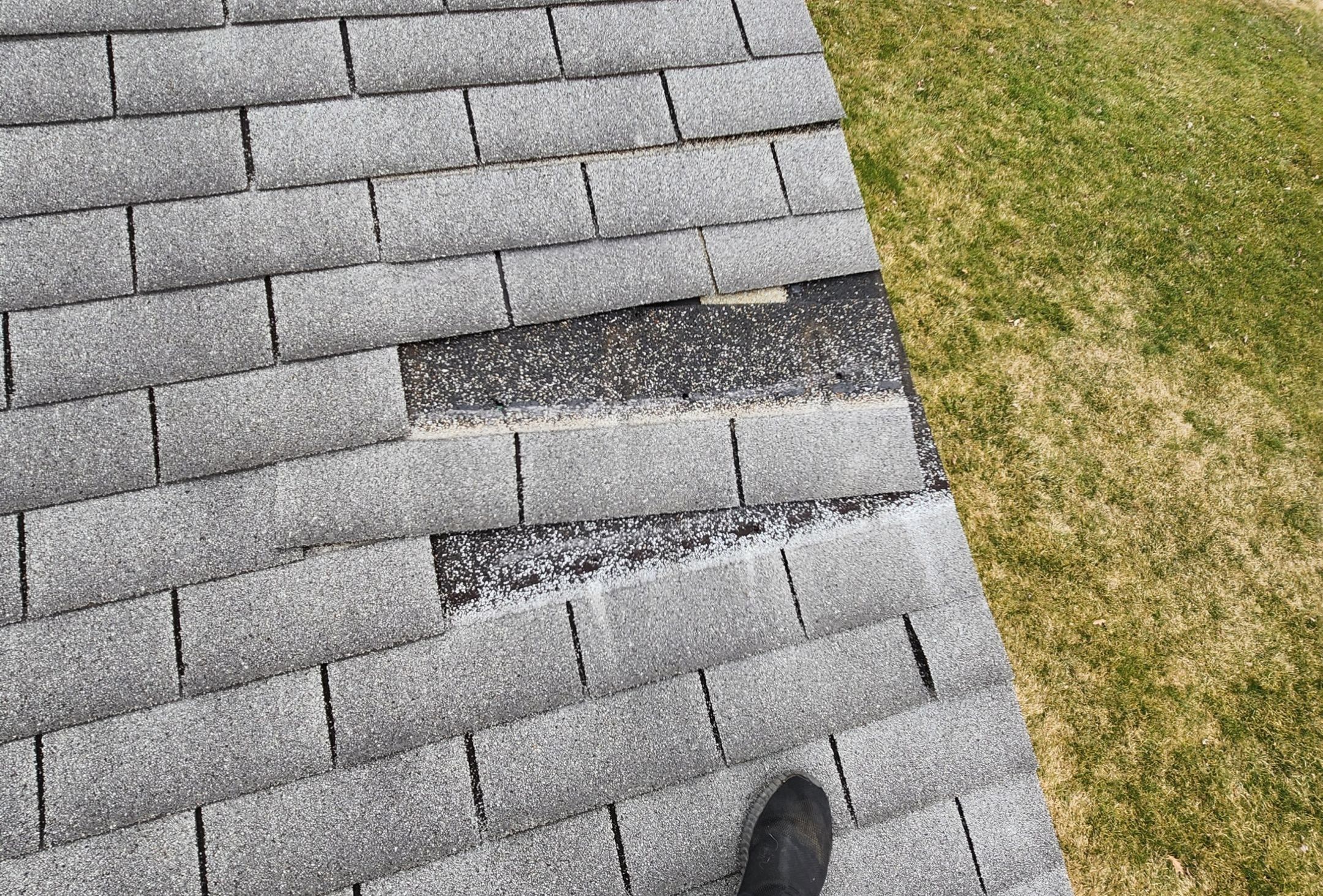
Lifted or missing shingles
Wind gets under a shingle's edge and lifts it, or tears it off completely. Once the layer underneath is exposed, the next rain is the problem.
Wind damage roof repair
Dayton Roofing Services
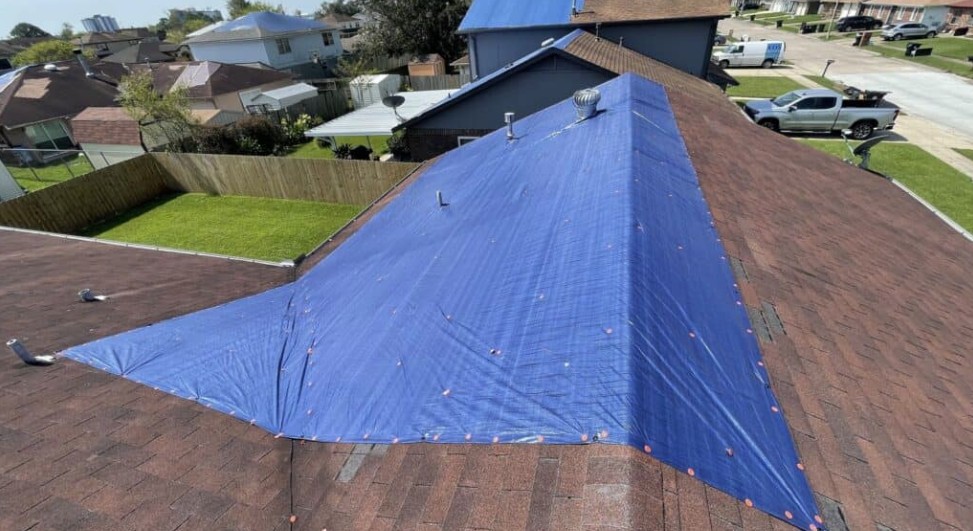
A tarp buys you time. Whether it buys you a week or a season depends entirely on how it's secured.
Not an emergency? Schedule a non-urgent assessment instead.
What's included
When a roof opens up — a tree limb, a wind event, a section of shingles gone — the damage stops being about the roof within a few hours. It becomes about the deck, the insulation, the ceiling below, and eventually the drywall and the flooring.
A tarp doesn't repair anything. What it does is stop the clock while the repair gets scoped, the insurance gets sorted, and the materials get ordered.
We tarp roofs throughout Dayton, Kettering, Centerville and Beavercreek, with same-day or next-day response.
Wind gets under a shingle's edge and lifts it, or tears it off completely. Once the layer underneath is exposed, the next rain is the problem.
Wind damage roof repair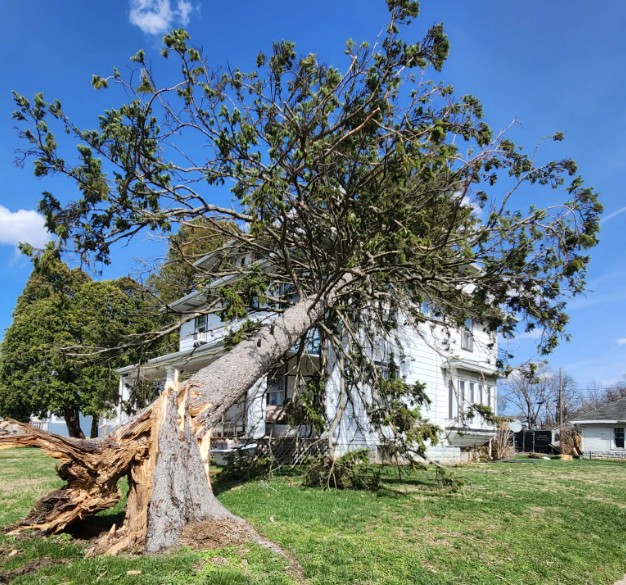
A limb or a whole tree can open a section of roof in seconds. The opening is rarely a clean hole — it's usually broken decking and scattered shingles.
Storm damage restoration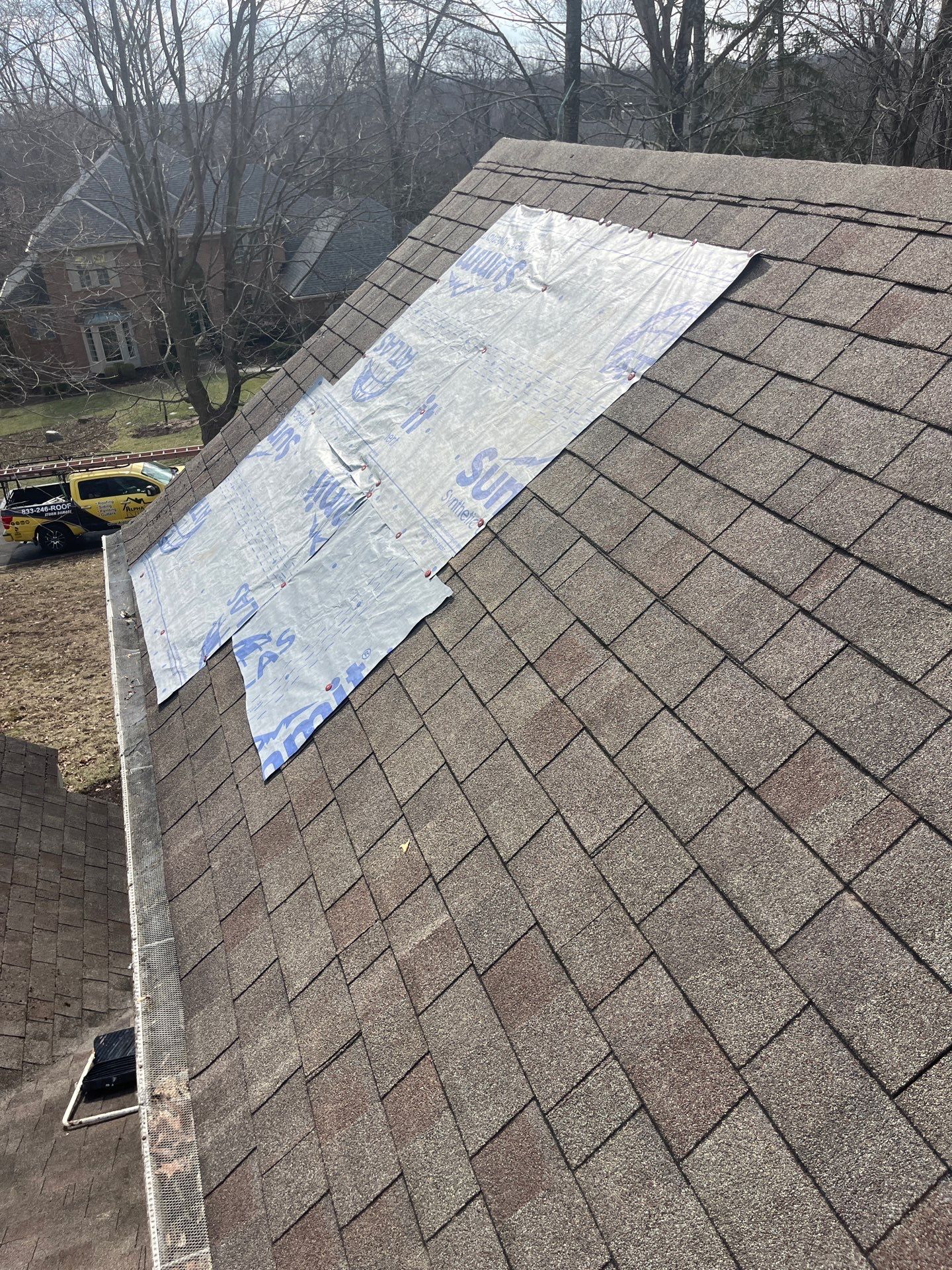
Fitted correctly, a tarp closes the opening until the permanent repair is scheduled. Fitted badly, it fails at the first hard rain.
Why most tarps failSection detail
A tarp that isn't carried over the ridge and anchored at the edges will leak, lift, or both. Select each part to see what it does.
Over the ridge. A tarp that stops short of the peak lets water run underneath it from the far slope. The single most common DIY failure.
Edge anchoring. Anchored with battens and weights along the edges, not nailed through the field of the tarp — every fastener through the middle is a new hole in a roof that's already leaking.
Beyond the damage. Coverage extends well past the damaged area in every direction, because wind-driven rain does not fall straight down.
Water sheds over. The result: water runs over the tarp and off the eave instead of into the opening.
Before we arrive
Genuinely useful, and it earns the page its links. Order matters — safety first.
Not sure what to expect from a claim? See filing an insurance claim.
Honesty
A correctly fitted tarp is a stopgap, not a repair. UV breaks polyethylene down, wind works at every anchor point, and a tarp that's been on a roof through a season is doing less than it was on day one.
We fit tarps to hold until the permanent repair is scheduled — not indefinitely. If a claim or a material lead time stretches out, the tarp gets checked and re-secured rather than left.
Insurance
Before a tarp goes on, the damage gets photographed. Once it's covered, that evidence is gone — and an adjuster who arrives after the tarp cannot see what was underneath it.
We photograph and document the damage as part of the tarping visit, and provide that record for your claim.
We don't handle your claim and we won't tell you what your policy covers. That's between you and your carrier. See filing an insurance claim, or read about storm damage repair and restoration.
Sequence
Eight steps, in order. Once the tarp is on, the evidence is underneath it — which is why photographing comes before covering.
The contractor
Interest-free financing options are available on repairs, and every permanent repair is covered by the AlphaOne Advantage Warranty.