
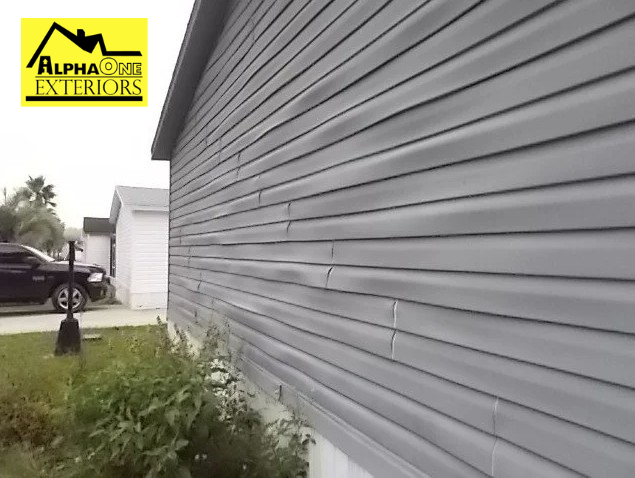
Warped or buckled siding is a common issue for homeowners in Dayton and throughout Southwest Ohio.
The short answer is this: heat, moisture, and improper installation are the primary causes.
Ohio weather creates the perfect conditions for siding movement. When materials cannot expand, contract, or shed water properly, they begin to distort.
Let’s break down why this happens.
What Does It Mean When Siding Warps or Buckles?
Warping and buckling occur when siding panels bend, ripple, or pull away from the wall.
You may notice:
- Wavy horizontal line
- Bulging sections
- Panels that appear loose or uneven
This is usually a sign that the siding cannot move naturally or that moisture is trapped behind it.
Can Heat Cause Siding to Warp in Ohio?
Yes. Heat is one of the most common causes of warped vinyl siding.
Vinyl expands when temperatures rise. During Dayton summers, surface temperatures on siding can exceed air temperature by a wide margin.
Direct Sunlight and Dark Colors
Dark colored siding absorbs more heat.
Homes in areas like Centerville and Beavercreek with long sun exposure on south or west facing walls often experience more expansion stress.
If panels are installed too tightly, they have no room to expand, which leads to buckling.
Reflected Heat from Windows and Roofs
We sometimes see melting or severe warping caused by reflected sunlight from energy efficient windows.
Low emissivity glass can reflect concentrated sunlight onto siding surfaces. This localized heat can distort panels quickly.
Does Moisture Cause Siding to Buckle?
Yes. Trapped moisture is another major factor.
Water Behind the Panels
Siding is designed to shed water, not seal it out completely.
If house wrap, flashing, or caulking is missing or improperly installed, water can penetrate behind the siding.
When wood sheathing absorbs moisture, it can swell. That movement pushes against siding panels, causing visible distortion.
Poor Drainage and Gutter Issues
Clogged or leaking gutters are common in Dayton.
Overflowing water saturates fascia and wall areas. Over time, repeated exposure leads to rot and structural shifting beneath the siding.
How Does Improper Installation Lead to Buckling?
Installation errors are one of the leading causes of siding failure.
Nailing Too Tight
Vinyl siding must be nailed loosely to allow horizontal movement.
If fasteners are driven tight against the panel, expansion has nowhere to go. The result is rippling or buckling within a few seasons.
Incorrect Expansion Gaps
Installers must leave small gaps at corners and trim pieces.
Without proper spacing, panels press against fixed surfaces as they expand in summer heat.
Inadequate Flashing Around Windows and Roof Lines
Flashing directs water away from vulnerable areas.
Missing or poorly installed flashing allows water intrusion, leading to swelling and eventual distortion of siding panels.
Do Freeze Thaw Cycles Affect Siding in Dayton?
Yes. Freeze thaw cycles add stress to exterior materials.
When moisture seeps behind the siding and freezes, it expands. This expansion can push panels outward.
Repeated cycles during Ohio winters weaken fasteners and shift panels over time.
Can Poor Ventilation Cause Siding Problems?
Yes. Poor attic or wall ventilation contributes to heat and moisture buildup.
Excess heat trapped in wall cavities increases expansion pressure. High interior humidity can also migrate into exterior walls.
Proper ventilation helps regulate temperature and moisture levels.
Does House Age Contribute to Warping Issues?
Older homes often have outdated moisture barriers or deteriorated sheathing.
In neighborhoods like Kettering and Oakwood, we frequently see aging materials beneath the siding that no longer provide stable support.
When the structure shifts or deteriorates, siding reflects those changes.
Is Warped Siding a Structural Concern?
Sometimes yes.
Minor cosmetic rippling may not indicate structural damage. However, significant bulging can signal underlying rot or sheathing failure.
If you notice soft spots beneath the siding or signs of water damage inside the home, professional evaluation is important.
How to Prevent Siding from Warping in Ohio
Prevention starts with proper installation and maintenance.
Key steps include:
- Allowing correct expansion spacing
- Installing siding with proper fastening technique
- Using quality house wrap and flashing
- Maintaining gutters and drainage systems
- Choosing appropriate siding thickness
Attention to these details ensures long term performance in Ohio climate conditions.
When Should You Repair vs Replace Buckled Siding?
Small localized issues may be repairable.
Full replacement may be necessary if:
- Large areas are distorted
- Underlying wood rot is present
- Panels have melted from heat exposure
- Installation errors are widespread
An inspection determines the best course of action.
What We Commonly See on Homes in Dayton
In Southwest Ohio, we often find:
- Tight nailing from rushed installations
- Missing flashing at roof intersections
- Moisture damage near clogged gutters
- Heat distortion on sun exposed elevations
Most of these problems trace back to installation practices rather than product defects.
Schedule a Professional Siding Inspection in Dayton
If your siding is warping or buckling, it is best to address the issue early.
At AlphaOne Exteriors, we evaluate:
- Installation technique
- Moisture intrusion risks
- Structural integrity
- Heat related distortion
- Gutter and drainage conditions
Our goal is to identify the root cause and recommend the right solution for your home.
Conclusion
Siding warps or buckles in Ohio primarily due to heat expansion, trapped moisture, freeze thaw stress, and improper installation.
Dayton weather demands careful installation techniques and proper moisture management. When those elements are missing, siding failure becomes much more likely.
If you notice rippling or distortion on your home in Dayton, Kettering, Centerville, Beavercreek, Oakwood, Springboro, Xenia, Fairborn, or nearby communities, AlphaOne Exteriors can provide a professional inspection and clear recommendations.
FAQs
No. Once siding has buckled due to tight fastening or heat damage, it typically requires repair or replacement.
Insurance may cover storm related damage but not installation errors or normal wear
Properly installed vinyl siding can last 20 to 40 years depending on maintenance and exposure.
Yes. Excessive heat from grills placed too close to the house can distort vinyl panels
Minor ripples may be cosmetic, but it is wise to have them inspected to rule out moisture issues.