

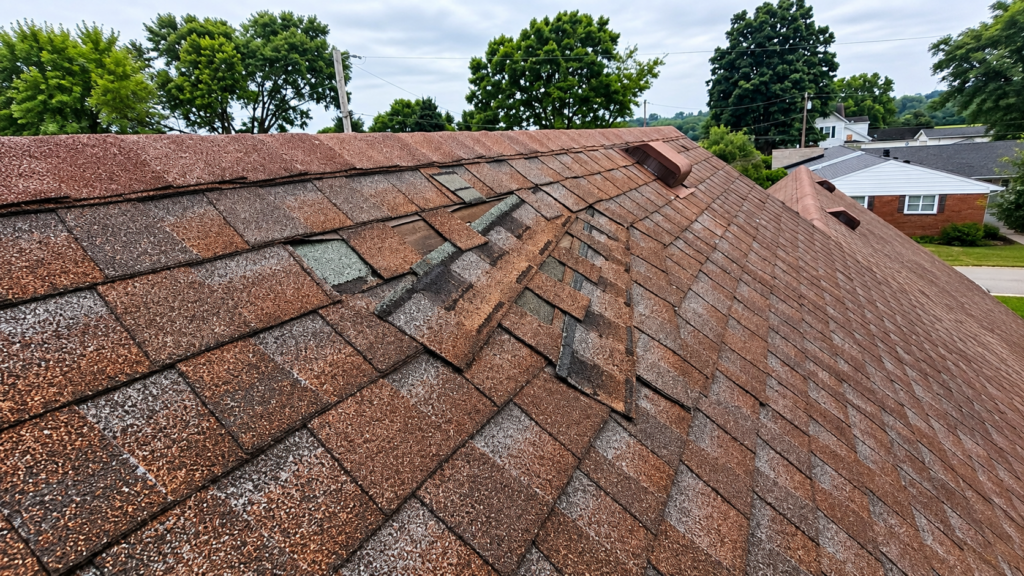
How long do you have to file a storm damage insurance claim in Ohio? There is no single reporting deadline that applies to every homeowners insurance policy. Your policy may establish separate deadlines for reporting damage, submitting proof of loss, and filing a lawsuit if a claim becomes disputed.
One year from the date of loss is an important deadline to watch for, because some Ohio homeowners insurance policies contain one-year limitations on filing a lawsuit against the insurer. However, that does not mean you automatically have one year to report storm damage. Your specific policy determines the applicable reporting requirements, and Ohio law can affect the enforceability of contractual deadlines.
If your home has suffered hail or wind damage, review your policy and notify your insurer promptly. Documenting the damage early can help preserve evidence and prevent unnecessary complications during the claims process.
What Deadlines Apply to Storm Damage Insurance Claims in Ohio?
Ohio homeowners should understand three separate deadlines when dealing with storm damage: the deadline to report damage, the deadline to submit proof of loss, and the deadline to file a lawsuit if a dispute arises.
These deadlines are not necessarily the same, and they can vary depending on your insurance policy.
What Is the Deadline for Reporting Storm Damage?
Your homeowners insurance policy establishes requirements for notifying your insurance company after discovering damage. Some policies require notice to be given promptly or as soon as reasonably possible, rather than specifying an exact number of days.
The Ohio Department of Insurance recommends reporting storm damage immediately.
Even if you are unsure whether the damage warrants an insurance claim, reviewing your policy and contacting your insurer promptly can help you understand your reporting obligations.
How Long Do You Have to Submit Proof of Loss?
A proof of loss is a formal statement documenting the damage and the amount being claimed. Depending on the policy and circumstances, your insurer may require a signed proof-of-loss form within a specified timeframe.
This is different from initially reporting damage.
Homeowners should review their policy’s proof-of-loss requirements and follow any applicable written instructions from their insurer. Do not delay the initial notification while waiting for a contractor’s estimate or completing your documentation.
Can an Ohio Homeowners Insurance Policy Have a One-Year Lawsuit Deadline?
Yes. Some Ohio homeowners insurance policies contain provisions requiring a lawsuit against the insurance company to be filed within one year of the date of loss.
In Dominish v. Nationwide Insurance Co., the Supreme Court of Ohio enforced a contractual provision requiring a lawsuit to be filed within one year of the loss under the circumstances presented in that case.
Ohio’s general statute of limitations for written contracts is six years, but that does not automatically give homeowners six years to report storm damage or pursue an insurance dispute.
The important takeaway is that a one-year lawsuit limitation is not the same as a one-year deadline to report an insurance claim.
If your claim has been denied, payment is disputed, or a contractual deadline is approaching, consider consulting an Ohio attorney familiar with property insurance disputes.
Which Insurance Policy Deadlines Should You Check?
| Policy provision | What it generally addresses |
|---|---|
| Notice of Loss | When and how to report damage |
| Duties After Loss | Documentation, cooperation, and other responsibilities |
| Proof of Loss | Requirements for submitting a formal statement of the loss |
| Suit Against Us / Legal Action Against Us | The contractual deadline for filing a lawsuit |
Review these provisions together rather than relying on a single deadline. If the wording is unclear, ask your insurer for clarification in writing.
How Long Does an Insurance Company Have to Respond to a Storm Damage Claim in Ohio?
Ohio law establishes claims-handling requirements for insurance companies, even though the deadlines homeowners must follow can vary by policy.
Under Ohio Administrative Code Rule 3901-1-54, insurance companies must follow specific timelines for acknowledging claims, responding to communications, investigating losses, and making payments.
What Are Ohio’s Insurance Claim Response Deadlines?
| Insurance company responsibility | General deadline |
|---|---|
| Acknowledge receipt of a claim | Within 15 days of notification |
| Respond to claimant communications requiring a response | Within 15 days |
| Accept or deny a claim after receiving properly executed proof of loss | Within 21 days, unless additional investigation is reasonably necessary |
| Provide updates during an extended investigation | Written status updates at least every 45 days |
| Pay an accepted claim when the amount is determined and undisputed | Within 10 days, subject to applicable exceptions |
These deadlines generally refer to calendar days, with adjustments under the regulation when certain deadlines fall on weekends or legal holidays.
What Happens if Your Insurance Company Needs More Time?
Not every storm damage claim can be resolved within 21 days. Some require additional inspections, documentation, or investigation.
When an insurer cannot make a decision within the applicable timeframe because further investigation is reasonably necessary, Ohio’s claims-handling regulation requires written notification explaining why additional time is needed.
The insurer must also continue providing written status updates at least every 45 days while the investigation remains unresolved.
Homeowners should keep copies of these communications and maintain a record of inspection dates, requests for information, and claim decisions.
What Can You Do if Your Insurance Company Misses a Deadline?
If your insurance company fails to follow Ohio’s claims-handling requirements, you can contact the Ohio Department of Insurance to ask questions or submit a consumer complaint.
Ohio Administrative Code Rule 3901-1-54 does not independently create a private right to sue an insurance company for violating the rule. However, other legal rights or remedies may exist depending on the circumstances.
Importantly, filing a complaint with the Ohio Department of Insurance does not automatically extend a deadline in your insurance policy.
If a contractual lawsuit deadline is approaching or you are involved in a disputed claim, consider speaking with a qualified Ohio attorney about your options.
What Documentation Do You Need for an Ohio Storm Damage Insurance Claim?
When filing a storm damage insurance claim in Ohio, homeowners should document the damage as thoroughly as reasonably possible while notifying their insurance company promptly.
The Ohio Department of Insurance recommends photographing damage, preventing additional losses through reasonable temporary repairs, and maintaining records throughout the claims process.
You do not need to wait for a roofing contractor’s inspection or a completed repair estimate before initially reporting damage to your insurer.
What Evidence Should You Collect After Wind or Hail Damage?
The following documentation can help establish what happened, when the damage occurred, and what repairs may be necessary.
| Documentation | Why it matters |
|---|---|
| Photos and videos | Record visible damage to roofing, siding, gutters, and other exterior components |
| Date of the storm | Helps establish when the damage may have occurred |
| Storm reports | Provide supporting weather information for the reported event |
| Contractor inspection report | Documents observed conditions, measurements, and recommended repairs |
| Repair estimates | Help establish the anticipated construction scope and costs |
| Emergency repair receipts | Document reasonable expenses incurred to prevent additional damage |
| Insurance communications | Create a record of reported damage, inspections, requests, and claim decisions |
Homeowners can use the NOAA Storm Events Database to research documented hail, wind, and severe weather events in their area.
However, a recorded storm event does not automatically establish that a particular property sustained covered damage. A property-specific inspection and the insurer’s coverage evaluation remain important.
Should You Have Your Roof Inspected Before Filing an Insurance Claim?
A professional roof inspection can help homeowners identify and document damage that may not be obvious from the ground.
For example, hail damage to asphalt shingles may involve granule loss, bruising, or fractured reinforcement, while wind damage may include creased shingles, lifted tabs, or missing roofing materials.
A qualified roofing contractor can document these conditions through photographs, measurements, and a written evaluation.
However, homeowners should not delay notifying their insurance company while waiting for an inspection appointment. Reporting the damage and arranging a contractor evaluation can occur in parallel.
What Is a Roofing Contractor’s Role in an Insurance Claim?
A roofing contractor’s role is to evaluate the physical condition of the property and provide construction-related information.
This may include:
- Inspecting roofing, siding, gutters, and other exterior components for visible damage.
- Photographing and documenting observed conditions.
- Preparing repair or replacement estimates and scopes of work.
- Explaining relevant installation requirements, materials, and repair methods.
- Providing construction documentation to the homeowner or insurer when appropriate.
AlphaOne Exteriors has experience documenting damage and preparing construction estimates for storm damage restoration projects throughout Dayton and Southwest Ohio.
Insurance coverage decisions belong to the insurance company, subject to the homeowner’s policy and applicable law. AlphaOne does not act as a public adjuster, negotiate or settle claims on behalf of homeowners, or guarantee claim approval.
A contractor’s inspection report can provide valuable evidence, but it does not independently determine whether an insurance claim is covered.
Can You Still File a Storm Damage Insurance Claim Months After the Storm?
Yes, it may still be possible to file a storm damage insurance claim months after the storm occurred. Whether the claim can proceed depends on your homeowners insurance policy, when the damage was discovered, the circumstances surrounding the delay, and any applicable legal requirements.
Some homeowners discover hail or wind damage long after a severe weather event. For example, missing shingles may be visible immediately, while certain types of hail damage may not be apparent without a closer roof inspection.
However, discovering damage months later does not automatically extend your insurance policy’s reporting or lawsuit deadlines.
What Should You Do if You Discover Storm Damage Months Later?
If you discover possible storm damage several months after a weather event:
- Review your homeowners insurance policy. Look for notice-of-loss requirements, proof-of-loss provisions, and any contractual lawsuit limitations.
- Notify your insurance company promptly. Explain when you discovered the damage and provide the information you currently have.
- Document the property’s condition. Take photographs and record visible damage before making permanent repairs, when it is safe to do so.
- Research previous storm activity. NOAA’s Storm Events Database can help identify documented wind and hail events in your area.
- Arrange a professional inspection. A qualified roofing contractor can evaluate the condition of your roof and other exterior components and prepare a written report.
If your roof is actively leaking or exposed to the elements, take reasonable steps to prevent additional damage. Emergency roof tarping may provide temporary protection while the damage is evaluated.
Can Your Insurance Company Deny a Claim Because You Reported It Late?
Late reporting can create complications, but it does not necessarily mean every delayed storm damage claim will be denied.
The outcome depends on the policy language, the circumstances of the delay, applicable Ohio law, and the available evidence.
For example, an insurance company may investigate whether the damage resulted from the reported storm, whether subsequent deterioration occurred, and whether the homeowner complied with the policy’s reporting and documentation requirements.
If your insurer denies a claim because of delayed reporting, request a written explanation identifying the policy provisions and circumstances supporting the decision.
If you disagree with the decision or a contractual deadline is approaching, consider consulting an Ohio attorney experienced in property insurance disputes.
Schedule a Storm Damage Inspection in Southwest Ohio
If your home has experienced hail, high winds, or other severe weather, a professional exterior inspection can help you understand the extent of the damage and what repairs may be necessary.
AlphaOne Exteriors provides residential roofing and exterior remodeling services throughout Dayton and Southwest Ohio, including Kettering, Beavercreek, Centerville, Huber Heights, Vandalia, and surrounding communities.
Our team can evaluate your roof, siding, gutters, and other exterior components for visible storm damage. When damage is identified, we can provide photographs, measurements, and a written construction estimate to help you understand the recommended repairs.
While AlphaOne does not determine insurance coverage or guarantee claim approval, we can provide construction-related documentation that may be useful during your insurance company’s evaluation.
If you suspect storm damage, don’t wait for a leak or another visible problem before having your exterior evaluated.
Contact AlphaOne Exteriors or call 937-401-3405 to request an inspection or discuss your exterior repair needs.
Frequently Asked Questions
Get clear answers to common questions about roof damage, inspections, storm damage, and insurance claims.
Does Ohio law set a deadline for filing a storm damage insurance claim?
No, Ohio does not establish one universal deadline for homeowners to report storm damage to their insurance company. Your homeowners insurance policy may require prompt notification and establish separate deadlines for submitting proof of loss or filing a lawsuit. Some Ohio policies contain a one-year lawsuit limitation, which the Ohio Supreme Court has enforced under certain circumstances. Review your policy to determine the deadlines that apply to your claim.
When does the insurer's 21-day decision clock start in Ohio?
Under Ohio Administrative Code Rule 3901-1-54, an insurer generally has 21 days to accept or deny a claim after receiving a properly executed proof of loss, unless additional investigation is reasonably necessary. This deadline does not automatically begin when you first report storm damage or submit photographs and repair estimates. Review your policy's proof-of-loss requirements and ask your insurer to confirm whether additional documentation is needed.
Can I sue my insurance company if it misses Ohio's 15-day or 21-day claim deadlines?
Missing a regulatory claims-handling deadline does not automatically give you the right to sue your insurance company. Ohio Administrative Code Rule 3901-1-54 does not independently create a private right of action for violations. However, depending on the circumstances, you may have separate legal remedies, such as a breach-of-contract or insurance bad-faith claim. You can also file a complaint with the Ohio Department of Insurance. Filing a complaint does not automatically extend your policy's deadline for filing a lawsuit.
Does continued negotiation or a partial payment from my insurance company extend my deadline to file a lawsuit?
Not automatically. Continuing to negotiate a storm damage claim or receiving a partial insurance payment does not necessarily extend your policy's lawsuit deadline. Under certain circumstances, an insurer's conduct may affect whether a contractual deadline can be enforced, but this is a fact-specific legal question. Do not assume that an open claim, ongoing negotiations, or additional payments give you more time. If your lawsuit deadline is approaching, consult an Ohio attorney experienced in property insurance disputes.
What is a roofing contractor's role in a storm damage insurance claim?
A roofing contractor evaluates and documents physical storm damage, prepares repair or replacement estimates, and explains the construction work needed to restore the property. This may include photographs, measurements, material identification, and applicable installation requirements. AlphaOne Exteriors provides these construction-related services for homeowners throughout Dayton and Southwest Ohio. A roofing contractor does not determine insurance coverage or guarantee claim approval, and should not act as a public adjuster unless separately authorized and properly licensed to do so.