

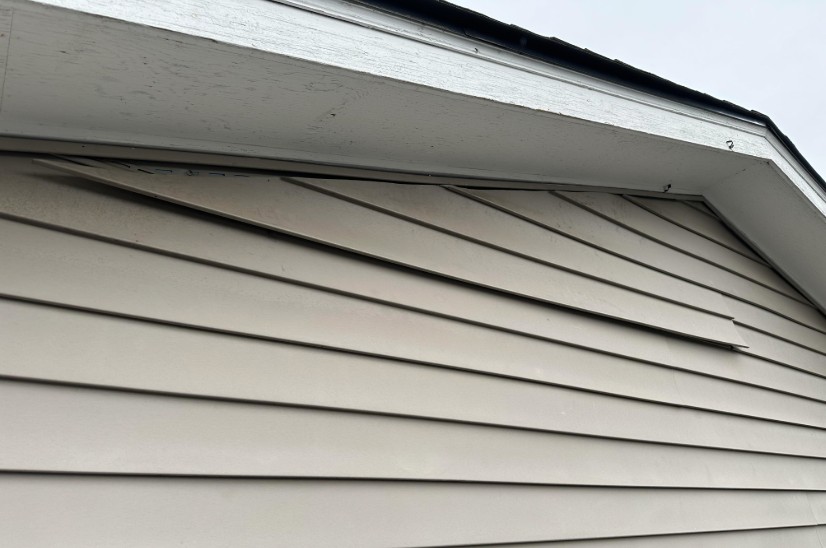
If your vinyl siding looks loose or sounds like it is rattling after storm damage in Dayton, Ohio, you are not alone.
The most common causes are strong winds, improper installation, or normal expansion combined with storm stress.
While loose siding may seem minor at first, it can expose your home to moisture and structural damage if ignored.
Let’s look at why this happens and what you should do next.
Is Loose Vinyl Siding After a Storm a Serious Problem?
Yes, it can be.
Loose siding allows wind driven rain to reach the wall beneath. Over time, this can lead to wood rot and insulation damage.
Even a small section that has pulled away should be evaluated, especially after high wind events in Southwest Ohio.
Can Strong Winds in Dayton Cause Vinyl Siding to Come Loose?
Yes. High winds are one of the leading causes of loose vinyl siding.
Dayton regularly experiences strong storm systems, particularly in spring and summer.
Wind Uplift and Panel Separation
Vinyl siding panels are designed to interlock.
When wind gets underneath a panel, it can lift and separate it from the course below. Once disengaged, the panel may hang loosely or flap during future winds.
Repeated gusts weaken the connection points.
Corners and Roof Lines as Vulnerable Areas
Wind pressure is strongest at:
• Corners of the home
• Gable ends
• Roof to wall intersections
• Upper story elevations
These areas are typically the first to show signs of loosening.
Does Improper Nailing Cause Siding to Loosen?
Yes. Installation technique plays a major role.
Vinyl siding must be installed with precise fastening methods to perform properly.
Nails Driven Too Tight
Nails should hold the panel in place while still allowing horizontal movement.
If nails are driven tight against the panel, the siding cannot expand and contract properly. Over time, stress builds and panels may pop loose.
Nails Placed Incorrectly in the Slot
Fasteners must be centered in the nailing slot.
If placed too high or too low, the panel cannot move correctly. During a wind event, improperly fastened panels are more likely to disengage.
Can Expansion and Contraction Make Siding Appear Loose?
Yes. Vinyl expands in heat and contracts in cold temperatures.
Dayton experiences wide seasonal temperature swings.
After a storm followed by cooler temperatures, siding may contract and appear slightly loose. If installation spacing was incorrect, this movement can become more noticeable.
Minor movement is normal. Significant separation is not.
How Do Freeze Thaw Cycles Affect Vinyl Siding?
Freeze thaw cycles can weaken siding connections over time.
If moisture enters behind the panel and freezes, it expands. This expansion can loosen fasteners or shift panels out of alignment.
Repeated cycles during Ohio winters gradually reduce attachment strength.
What Damage Should You Look for After a Storm?
After strong winds or heavy rain, inspect your siding for:
• Panels that have shifted out of place
• Gaps between courses
• Cracks or splits
• Rattling sounds in windy conditions
• Pieces found on the ground
Early detection prevents larger issues.
Can Loose Siding Lead to Water Intrusion?
Yes. Once panels disengage, the protective layering system can be compromised.
Water may reach:
• House wrap
• Sheathing
• Insulation
• Framing
In Dayton’s humid climate, trapped moisture can quickly lead to mold or rot if not addressed.
Should You Repair or Replace Loose Vinyl Siding?
It depends on the extent of damage.
Small sections that have come loose but are not cracked can often be re secured.
In some cases, full vinyl siding replacement may be the best long-term solution if:
• Panels are cracked or torn
• Locking edges are damaged
• Multiple areas are affected
• Underlying wood shows signs of rot
A professional evaluation determines the best course of action.
Is Storm Damaged Siding Covered by Insurance?
Storm related wind damage is often covered by homeowners insurance.
Coverage depends on your policy and documentation of the event.
If you suspect storm damage, it is important to schedule an inspection promptly.
How to Temporarily Protect Loose Siding
If siding has pulled away significantly:
- Avoid attempting major repairs yourself
- Do not drive additional nails through visible surfaces
- Protect the area from direct water exposure if possible
- Schedule a professional inspection
Improper temporary fixes can create additional problems.
When to Call a Professional in Dayton
Contact a professional if you notice:
• Multiple loose panels
• Visible gaps near windows or roof lines
• Interior moisture stains
• Repeated rattling during moderate winds
Prompt repair reduces the risk of hidden water damage.
Schedule a Siding Inspection with AlphaOne Exteriors
At AlphaOne Exteriors, we inspect storm affected siding for:
• Wind related separation
• Installation issues
• Moisture intrusion risk
• Structural integrity beneath panels
We serve homeowners throughout Dayton, Kettering, Centerville, Beavercreek, Oakwood, Springboro, Xenia, Fairborn, and surrounding communities.
Our goal is to provide clear guidance so you can protect your home with confidence.
Conclusion
Loose vinyl siding after a storm is usually caused by wind uplift, improper fastening, or expansion stress.
In Ohio’s challenging climate, even small areas of separation can lead to moisture problems if ignored. Acting quickly helps prevent long term structural damage.
If your siding looks loose after a recent storm, AlphaOne Exteriors can provide a professional inspection and recommend the right solution for your home.
FAQs
Yes. Vinyl siding is designed to move horizontally, but it should not hang loose or separate from adjacent panels.
Minor re locking may be possible, but improper handling can cause cracking or further disengagement.
As soon as possible to prevent water intrusion and additional wind damage.
Yes. Aging panels and weakened fasteners are more susceptible to wind damage.
Yes. Gaps allow air infiltration, reducing energy efficiency.