

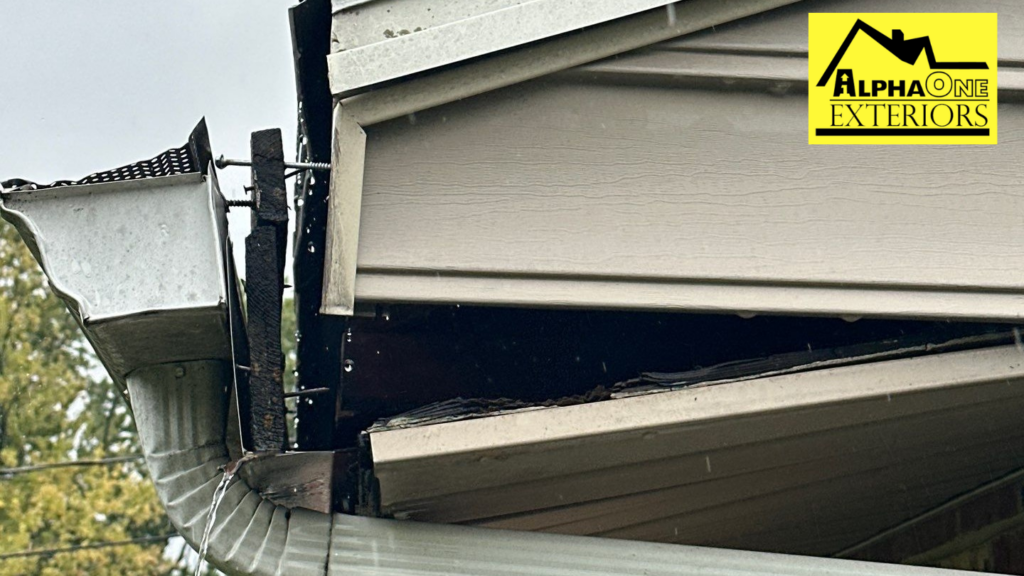
You should replace your gutters when they show widespread damage, frequent leaks, sagging, rust, or when repairs become more costly than replacement.
In Dayton and surrounding communities, seasonal freeze thaw cycles, heavy rain, and winter snow load place constant stress on gutter systems. Catching replacement signs early helps prevent foundation damage and costly interior repairs.
Here is how to know when it is time.
How Do You Know It Is Time to Replace Your Gutters?
It is time to replace your gutters when damage affects multiple sections or when the system no longer drains water properly.
Quick Signs to Watch For
- Sagging or pulling away from the house
- Multiple cracks or splits
- Frequent leaks at seams
- Rust spots or corrosion
- Water pooling near the foundation
- Peeling paint on fascia boards
If more than one of these issues is present, replacement is often the smarter long term solution.
How Long Do Gutters Typically Last in Ohio?
Most aluminum gutters in Ohio last twenty to thirty years with proper maintenance.
However, lifespan depends on:
- Installation quality
- Exposure to heavy storms
- Winter ice stress
- Tree debris buildup
In neighborhoods like Oakwood and Kettering with mature trees, debris can shorten gutter life if not cleaned regularly.
What Are the Visible Signs of Gutter Failure?
Certain issues clearly indicate structural decline.
Cracks and Splits
Small cracks may seem minor, but they grow over time.
In winter, trapped water freezes and expands, widening splits and causing leaks during spring rain.
Sagging or Pulling Away From the House
Sagging gutters are often caused by:
- Loose fasteners
- Ice weight from winter buildup
- Rotted fascia boards
If gutters no longer maintain proper slope, water cannot drain efficiently.
Rust and Corrosion
Steel systems are especially vulnerable once protective coatings wear down.
Rust weakens structural integrity and leads to holes.
Peeling Paint or Rotting Wood
If paint is peeling near the roofline or fascia feels soft, water may be escaping behind the gutter.
This often signals long term drainage failure.
Can Frequent Repairs Mean It Is Time for Replacement?
Yes. Repeated repairs often indicate system wide aging.
If you are constantly:
- Resealing seams
- Reattaching loose sections
- Patching small holes
It may be more cost effective to install a new system.
A full replacement provides consistent performance instead of temporary fixes.
Are Leaking Seams a Sign You Need New Gutters?
Yes, especially if leaks appear in multiple areas.
Sectional gutters rely on sealed joints. Over time:
- Sealant breaks down
- Expansion and contraction weaken seams
- Water escapes during heavy rain
Seamless gutters reduce these failure points.
What Happens If You Wait Too Long to Replace Gutters?
Delaying replacement increases the risk of structural damage.
Foundation Damage
Overflowing gutters allow water to pool near the home.
In Dayton clay heavy soil, moisture causes expansion that stresses foundation walls.
Basement Moisture
Improper drainage increases hydrostatic pressure, which can lead to basement leaks.
Siding and Fascia Deterioration
Water running behind gutters damages:
- Wood trim
- Exterior paint
- Siding materials
What begins as a gutter issue can spread to other exterior components.
Do Ohio Winters Shorten Gutter Lifespan?
Yes. Freeze thaw cycles are a major factor.
When water freezes inside gutters:
- Ice expands
- Hangers loosen
- Pitch changes
Repeated winter stress weakens older systems.
After harsh winters, we often find sagging sections during spring inspections in Beavercreek and Centerville.
Should You Replace Gutters When Replacing Your Roof?
Often, yes.
If gutters are nearing the end of their lifespan, replacing them during a roof project ensures:
- Proper alignment
- Clean installation
- Updated drainage capacity
This prevents having to disturb a new roof later.
Can Larger or Seamless Gutters Improve Performance?
Yes. Upgrading can improve long term durability.
Six inch aluminum gutters handle heavy Ohio rain more effectively than smaller systems on large roofs.
Seamless gutters:
- Reduce leak points
- Improve structural strength
- Require less maintenance
Proper sizing and secure attachment are critical for performance.
How to Decide Between Repair and Replacement
Consider replacement if:
- Damage is widespread
- Gutters are over twenty years old
- Multiple sections sag or leak
- Water drainage problems persist
Repairs make sense for isolated damage on newer systems. Replacement makes sense for aging or failing systems.
Final Thoughts for Dayton Homeowners
You should replace your gutters when they show widespread wear, frequent leaks, or structural separation from the home. In Dayton climate conditions, winter ice, heavy rain, and temperature swings accelerate aging.
Addressing gutter problems early protects your foundation, siding, and basement from water damage.
If you live in Dayton, Kettering, Centerville, Beavercreek, Oakwood, Springboro, Xenia, or Fairborn and are unsure whether your gutters need repair or replacement, AlphaOne Exteriors can provide a professional inspection and clear recommendations tailored to your home.
FAQs
At least once per year and after major storms or heavy winter snow.
Not always. Minor sagging can sometimes be corrected, but widespread sagging often indicates structural decline.
Yes. Properly sized and pitched gutters significantly improve water management.
Yes. They reduce leak points and last longer than sectional systems.
Spring and fall are ideal, but replacement can be completed whenever weather conditions allow safe installation.