

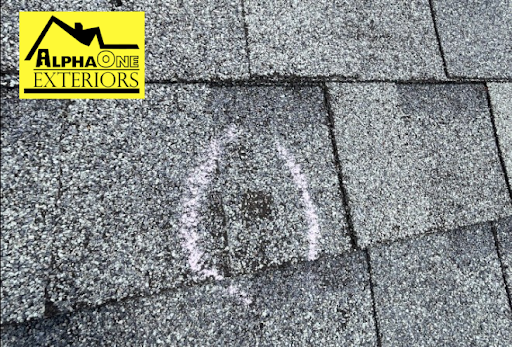
Hail storms are common in Dayton and throughout Southwest Ohio, especially in late spring and summer. After a storm rolls through, many homeowners look up at their roof and wonder: Did that storm cause damage?
Hail damage on asphalt shingles is not always obvious from the ground. In many cases, the roof may look fine until leaks appear months later. Below is a clear guide to help you understand what hail damage actually looks like, how it affects your roof, and what to do next.
What Does Hail Damage Look Like on Asphalt Shingles?
Hail damage on asphalt shingles typically appears as dark spots, bruises, granule loss, or small impact craters.
Common visual signs include:
- Random circular marks on shingles
- Areas where granules are missing
- Exposed black asphalt beneath the surface
- Soft spots that feel spongy when gently pressed
- Small cracks radiating from impact points
Damage is usually scattered, not uniform. If marks appear randomly across several slopes, hail is often the cause.
Industry authorities such as HAAG Engineering have published detailed technical guidance on identifying hail damage to asphalt shingles. Their research explains how impact forces fracture the fiberglass mat beneath the surface and loosen protective granules — damage that may not always be visible from the ground.
For homeowners who want deeper technical insight, HAAG’s article titled “Hail Damage to Asphalt Roof Shingles” provides a more in-depth engineering perspective.
What Are Hail Bruises on Shingles?
Hail bruises are soft impact spots where the fiberglass mat beneath the shingle has been weakened.
A hail bruise may:
- Feel soft under light pressure
- Look slightly darker than surrounding shingles
- Have loose or missing granules
- Show subtle cracking over time
In Dayton’s climate, these bruised areas often fail during the next freeze and thaw cycle. Water seeps into the weakened area, freezes in winter, expands, and worsens the damage.
How Big Does Hail Need to Be to Damage Asphalt Shingles?
Hail around one inch in diameter or larger can damage asphalt shingles, especially if the roof is older.
Factors that increase the likelihood of damage include:
- Roof age over ten to fifteen years
- Lower quality shingles
- High wind speeds during the storm
- Brittle shingles from sun exposure
In Southwest Ohio, we commonly inspect roofs after storms producing hail between one and one and a half inches. Combined with strong wind, that size is enough to bruise many asphalt shingles.
Is Hail Damage Visible From the Ground?
Most hail damage to asphalt shingles is not clearly visible from the ground.
From your yard, you may notice:
- Dented gutters
- Dented metal vents or flashing
- Granules collecting near downspouts
- Shingle debris in landscaping
These signs suggest possible roof damage but do not confirm it. A professional roof inspection after hail damage is usually necessary to determine the extent of storm-related damage.
What Does Hail Damage Look Like on New Versus Old Shingles?
Hail damage on newer shingles may appear subtle, while older shingles often show more severe impact marks.
On newer roofs:
- Granule loss may be minimal
- Bruises may not crack immediately
- Damage can be harder to detect
On older roofs:
- Granules dislodge more easily
- Impact spots may crack quickly
- Shingles may fracture or split
In Dayton, older roofs are especially vulnerable because years of temperature swings make shingles more brittle.
How Is Hail Damage Different From Normal Wear and Tear?
Hail damage appears random and concentrated, while normal aging is gradual and uniform.
Hail damage characteristics:
- Random circular impact marks
- Dents in soft metal components
- Localized granule loss
Normal wear and tear characteristics:
- Even fading across large areas
- Gradual granule thinning
- No denting of metal vents or gutters
Insurance adjusters in Ohio look for these patterns when evaluating storm claims.
Can Hail Damage Cause Immediate Leaks?
Hail damage does not always cause immediate leaks, but it weakens shingles and increases future leak risk.
Many homeowners do not notice a problem until:
- Heavy rain exposes compromised areas
- Winter freeze and thaw cycles expand cracks
- Shingles begin to split months later
Delayed leaks are common after hail storms in Dayton, especially during the following winter.
What Other Roof Components Show Hail Damage?
Hail often damages soft metal components along with shingles.
Inspect for:
- Dents in roof vents
- Dents in flashing
- Damaged ridge caps
- Dented gutter systems
If metal components show clear impact marks, there is a strong possibility the shingles were affected as well.
Can Hail Damage Shorten the Life of My Roof?
Yes. Even minor hail damage can reduce the lifespan of asphalt shingles.
When granules are knocked off:
- Ultraviolet rays degrade exposed asphalt faster
- Shingles become brittle sooner
- Cracking increases
- Wind resistance decreases
In Ohio’s climate, that reduced protection often leads to earlier roof replacement.
How Soon Should I Have My Roof Inspected After Hail?
Schedule a professional inspection as soon as possible after a confirmed hail event in your area.
You should prioritize an inspection if:
- Hail was one inch or larger
- Neighbors are filing insurance claims
- You notice dented gutters or vents
- Your roof is over ten years old
Prompt inspection allows you to document storm related damage before it worsens.
Is It Safe to Inspect Hail Damage Yourself?
Ground level inspection is safe. Walking on the roof is not recommended.
Asphalt shingles can become fragile after hail impact. Stepping on them may cause additional cracking. Roof surfaces can also be slippery, especially after rain.
Professional inspections include safe access methods and detailed documentation.
What Happens If Hail Damage Is Ignored?
Ignoring hail damage can lead to leaks, mold, wood rot, and structural deterioration.
Over time, weakened shingles may:
- Crack during winter temperature swings
- Lift during wind storms
- Allow water into attic spaces
In Dayton’s freeze and thaw environment, small impact areas often expand into larger failures within one or two seasons.
Final Thoughts on Identifying Hail Damage on Asphalt Shingles
Hail damage on asphalt shingles often appears as random dark spots, bruises, granule loss, and soft impact areas. It may not cause immediate leaks, but it weakens your roof and shortens its lifespan.
Because Ohio weather brings repeated storms and temperature swings, even subtle damage can become serious over time.
If you suspect your roof was exposed to hail in Dayton or surrounding communities such as Kettering, Centerville, Beavercreek, Oakwood, Springboro, Xenia, or Fairborn, AlphaOne Exteriors can provide a thorough and honest roof inspection. Our goal is to help you understand the condition of your roof and make informed decisions about next steps.
Frequently Asked Questions
Yes. Hail around one inch in diameter can bruise shingles, especially if they are older.
No. Damage depends on hail size, wind speed, roof age, and shingle condition.
Coverage depends on your policy and whether damage is confirmed as storm related.
Leaks may develop months later, particularly after freeze and thaw cycles.
That depends on the extent and distribution of damage. A professional inspection helps determine whether repair or replacement is appropriate.