
Why Homeowners Ask This Question
It’s common for homeowners to feel unsure about what a roofing inspection involves. You might wonder if a contractor will need access to your attic, upper floor, or any part of your home’s interior. The short answer is: sometimes, yes but not always. Whether or not a roofing contractor needs to come inside depends on the type of work being done and the condition of your home.
When a Roofing Contractor Typically Stays Outside
In most cases, your roofer can inspect, estimate, and even complete your project without stepping foot inside your home.
Common situations where interior access is not needed:
- Visual roof inspections from the ground or rooftop
- Drone or satellite-based measurements
- Full roof replacements
- Shingle repair or replacement
- Gutter installation or exterior painting
For most of these services, especially with clear weather and good exterior access, there’s no need to go inside.
When a Roofing Contractor May Need to Come Inside
There are certain situations where accessing the interior, usually the attic, is necessary to fully diagnose issues.
A roofing contractor may ask to come inside if:
- You are reporting an active roof leak
- There are visible water stains on your ceilings
- There is concern about mold, moisture, or insulation damage
- The roofer needs to inspect roof decking from below
- There is no exterior access to certain roof areas
In these cases, going inside helps the contractor confirm the source of the problem and recommend the right solution.
Why the Attic Matters in Roof Inspections
Your attic is the space directly below your roof, and it holds valuable clues about your roof’s health.
A quick attic inspection can reveal:
- Signs of water intrusion
- Rotted decking, type of decking & damaged rafters
- Poor ventilation
- Mold or mildew caused by roof leaks
- Wet or compressed insulation
Especially in Ohio’s climate, where freeze-thaw cycles and heavy storms are common, moisture can build up quickly and go unnoticed from the outside. A five-minute attic check can save thousands in long-term repairs.
Can I Refuse to Let the Roofer Inside?
Yes, it’s your home, access is always your choice. However, keep in mind that if the contractor can’t fully inspect the roof system, their recommendations may be limited.
If you’re uncomfortable, ask:
- Why do you need to go inside?
- How long will it take?
- What exactly are you checking?
A trustworthy contractor will always respect your space and explain clearly why interior access is being requested.
What Happens During an Interior Roof Inspection
If a contractor does need to come inside, the process is usually quick and noninvasive.
Here’s what to expect:
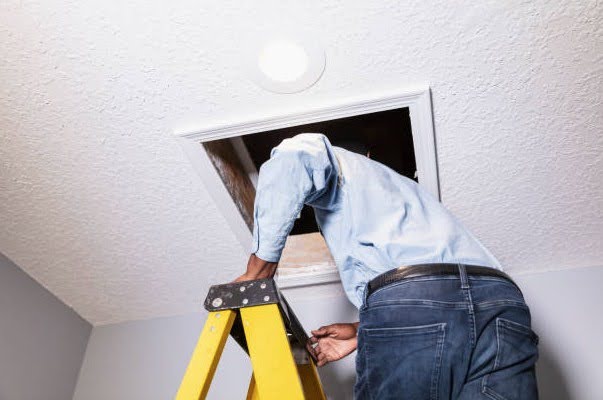
- The roofer will ask for access to the attic, usually through a pull-down staircase or hatch.
- They’ll bring a flashlight and possibly a camera or moisture meter.
- They will visually inspect for leaks, mold, or damaged materials.
- The inspection usually takes 10 to 15 minutes.
- No tools, demolition, or damage is involved.
No furniture is moved, and no part of your living space is disrupted. Just make sure the attic entry is clear and safe.
Does the Contractor Need to Go Into Other Rooms?
In most cases, only the attic or top floor is relevant. However, if water stains are visible on your ceilings or walls, the contractor may want to see them to trace the leak.
This helps identify whether the issue is from the roof, plumbing, or another source. Again, your permission is always required.
How Dayton, Ohio Homes Influence Inspection Needs
Many homes in Dayton and surrounding areas like Kettering, Beavercreek, or Xenia, have older roof systems, low-pitch angles, or complex attic ventilation. These factors make interior access more likely.
Winters in the Miami Valley bring freeze-thaw cycles that can push water into attic spaces without showing signs on the roof surface. And summer storms can cause wind-driven rain to seep through even small vulnerabilities. Attic inspection helps catch these early.
How to Prepare for a Roof Inspection
If you’re scheduling a roof inspection and think the contractor may need to come inside, here’s how to get ready:
- Clear access to your attic entrance
- Make sure pets are secure and children are safe
- Turn on lights in rooms near roof access
- Be ready to answer questions about leaks or water damage
- If possible, have someone home to guide the contractor
What if I’m Not Home During the Inspection?
Most roofing inspections can be done even if you’re not home but only exterior evaluations. If an attic check is necessary, you’ll need to be present or arrange access. Some homeowners choose to schedule a two-part inspection: exterior first, interior later.
Trust and Transparency Are Key
Any reputable roofing company should:
- Explain why they want to go inside
- Ask for your permission first
- Be clear about what they’re looking for
- Be respectful of your home
- Keep the inspection brief and focused
At AlphaOne Exteriors, we prioritize clear communication with every homeowner we serve in Dayton and nearby communities. You’ll never be pressured or left wondering what’s happening.
Conclusion
So, does a roofing contractor need to come inside your home? Not always but sometimes, yes. If you’re dealing with leaks, stains, or concerns about hidden damage, attic access helps provide a complete and accurate diagnosis. And in a climate like Dayton’s, where weather conditions change fast, catching hidden problems early can prevent major repairs later.
If you’re unsure about your roof’s condition or have specific concerns, contact AlphaOne Exteriors for a professional evaluation. Our team serves homeowners across Dayton, Kettering, Centerville, Springboro, and beyond and we’re always happy to help, with or without coming inside.
FAQs
Yes. Most routine roof inspections and estimates can be done entirely from the exterior, especially for full replacements or visible repairs.
To check for hidden damage like leaks, rotted decking, mold, or ventilation issues that may not be visible from outside.
As long as you’re working with a licensed, insured, and reputable company, interior inspections are quick, noninvasive, and safe.
Let the contractor know. They may use thermal imaging, roof core samples, or alternative inspection methods based on the situation.
Typically 10 to 15 minutes. It’s a visual inspection only, no demolition or major disruption is involved.