
When a storm damages your roof, most homeowners assume the insurance company will simply pay to repair the damaged area and restore everything back to normal.
Unfortunately, that is not always how insurance claims work.
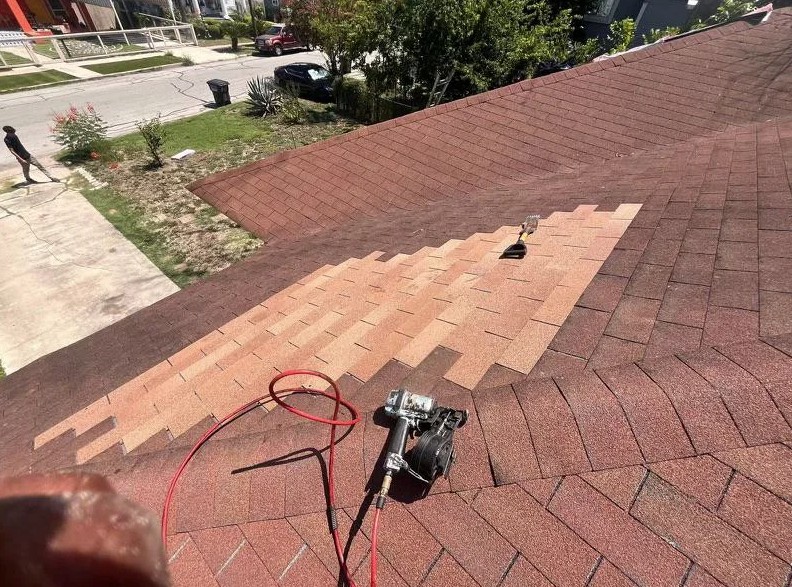
Many Ohio homeowners discover that once repairs are completed, the new shingles look noticeably different from the existing roof. The color may be off. The texture may be different. The profile may not match. In some cases, the repaired section stands out so dramatically that it becomes the first thing people notice when they pull into the driveway.
That is exactly why the Ohio Roof Matching Law exists.
The Ohio Roof Matching Law provides important protections for homeowners when damaged roofing materials cannot be properly matched. Depending on the circumstances, an insurance company may be required to replace additional portions of a roof or even the entire roof to achieve a reasonably comparable appearance.
Understanding how the law works, how insurance companies evaluate matching, and how evidence such as ITEL testing and material availability reports can impact a claim may significantly affect the outcome of your insurance settlement.
As a roofing contractor serving Dayton, Kettering, Beavercreek, Centerville, Springboro, Fairborn, and surrounding Southwest Ohio communities, AlphaOne Exteriors regularly encounters homeowners who are surprised to learn that matching issues can become one of the most important factors in a storm damage claim.
This guide explains what the Ohio Roof Matching Law is, how it applies to roofing insurance claims, when full roof replacement may be required, and how homeowners can protect themselves during the claims process.
What Is the Ohio Roof Matching Law?
The Ohio Roof Matching Law is part of Ohio Administrative Code 3901-1-54, which establishes standards insurance companies must follow when adjusting property damage claims.
While homeowners often refer to it as the “Ohio Roof Matching Law,” the regulation actually applies to many different types of property damage repairs, including roofing, siding, gutters, trim, and other exterior building materials.
The purpose of the regulation is simple:
When damaged property is repaired or replaced, the finished result should maintain a reasonably consistent appearance rather than creating an obvious patchwork of mismatched materials.
The regulation protects homeowners from situations where an insurance company attempts to repair only a small damaged area while leaving the home with visible differences in color, texture, size, or overall appearance.
For roofing claims, this issue frequently arises after:
- Hail damage
- Wind damage
- Fallen tree impacts
- Fire damage
- Structural repairs requiring roof replacement
- Storm-related roof repairs
The older the roof becomes, the more challenging matching often becomes.
Exact Ohio Administrative Code Language
The section most commonly referenced during roof matching disputes states:
“When an interior or exterior loss requires replacement of an item and the replaced item does not match the quality, color or size of the item suffering the loss, the insurer shall replace as much of the item as to result in a reasonably comparable appearance.”
This language comes from Ohio Administrative Code 3901-1-54(I)(1)(b).
Although the wording appears straightforward, the phrase “reasonably comparable appearance” often becomes the center of disagreement between homeowners, contractors, adjusters, engineers, and insurance carriers.
Understanding what that phrase means is critical to understanding how the Ohio Roof Matching Law works.
What Does “Reasonably Comparable Appearance” Mean?
The phrase “reasonably comparable appearance” is arguably the most important language in the entire regulation.
Insurance companies are not necessarily required to create a perfect match.
However, they are generally expected to provide a repair or replacement that results in a reasonably consistent appearance when viewed as a whole.
Several factors may influence whether a repair creates a reasonably comparable appearance:
Color
The replacement materials should closely resemble the color of the existing materials.
For roofing systems, even small differences in color can become highly noticeable, especially when the repair occurs on a visible roof slope.
Texture
Different shingle products often have different surface textures and granule patterns.
Even when colors appear similar, texture differences can make a repair obvious from the ground.
Profile
Architectural shingles, dimensional shingles, and laminate shingles often have unique shadow lines and dimensional characteristics.
A similar color does not necessarily mean the profile matches.
Size and Exposure
Shingles are manufactured with specific dimensions and exposures.
Differences in exposure can create visible inconsistencies throughout the roof system.
Overall Appearance
The regulation ultimately focuses on the overall visual appearance of the repaired structure.
This means that matching is not evaluated solely by comparing product specifications on paper.
The finished appearance matters.
Does the Ohio Roof Matching Law Require a Perfect Match?
No.
This is one of the most common misconceptions homeowners have about matching disputes.
The Ohio Roof Matching Law does not guarantee a perfect match.
Instead, it requires a reasonably comparable appearance.
This distinction matters because roofs naturally weather over time.
Even if the exact same shingle is available, a brand-new shingle installed beside a 15-year-old roof may still appear different due to:
- UV exposure
- Granule loss
- Weathering
- Dirt accumulation
- Aging
- Environmental conditions
The key question is not:
“Is the replacement identical?”
The key question is:
“Does the repair create a reasonably comparable appearance?”
That determination often becomes the focus of insurance claim disputes.
Is Ohio a Matching State?
Yes.
Ohio is generally considered a matching state because Ohio Administrative Code 3901-1-54 specifically addresses matching requirements when property repairs are performed through an insurance claim.
Not every state has similar regulations.
In some states, insurance companies may have significantly more flexibility when approving partial repairs.
Ohio homeowners benefit from stronger consumer protections because insurers must consider the appearance of the finished repair rather than focusing exclusively on the damaged area itself.
This does not mean every roof damage claim automatically results in full replacement.
However, it does mean homeowners have important protections when matching becomes impossible or unreasonable.
Why Roof Matching Becomes a Problem
Many homeowners assume that matching roof shingles is relatively simple.
In reality, matching problems have become increasingly common throughout the roofing industry.
Several factors contribute to these challenges.
Shingles Get Discontinued
Roofing manufacturers regularly update product lines.
Over time, older shingles may be discontinued and replaced with newer products.
When a roof experiences storm damage years after installation, the original shingle may no longer be available.
If the exact product cannot be purchased, matching becomes substantially more difficult.
Roofs Weather Differently Over Time
Even if matching shingles remain available, roofs naturally change appearance as they age.
Factors that influence weathering include:
- Sun exposure
- Rain
- Snow
- Ice
- Temperature fluctuations
- Wind-driven debris
Two shingles that looked identical when installed may appear dramatically different after fifteen years of exposure to Ohio weather.
Manufacturers Change Products
Manufacturers occasionally modify:
- Granule blends
- Color formulas
- Manufacturing processes
- Product specifications
As a result, a modern shingle may not look identical to an older version of the same product line.
Repairs Can Be Highly Visible
Some roof slopes are far more visible than others.
A mismatch on a rear slope may not attract significant attention.
A mismatch on the front-facing slope of a home may be immediately obvious from the street.
Visibility often becomes an important factor during matching evaluations.
Why This Issue Is Becoming More Common
The average age of residential roofing systems continues to increase.
At the same time:
- Manufacturers discontinue products more frequently.
- Material shortages occasionally affect availability.
- Severe weather events continue to generate large numbers of insurance claims.
- Homeowners are keeping roofs longer than previous generations.
These factors have made matching disputes increasingly common throughout Ohio and across the country.
For homeowners dealing with storm damage, understanding how matching works before accepting an insurance settlement can help prevent costly surprises later in the repair process.
When Does Ohio Insurance Owe for a Full Roof Replacement?
One of the biggest misconceptions homeowners have is that any storm damage automatically results in a full roof replacement.
That is not how most insurance claims work.
Likewise, many insurance companies incorrectly assume that replacing only the visibly damaged shingles automatically satisfies their obligations.
The reality usually falls somewhere in between.
Under Ohio’s matching requirements, the question is not simply:
“Can the damaged shingles be replaced?”
The question is:
“Can the damaged shingles be replaced while maintaining a reasonably comparable appearance?”
That distinction often determines whether a homeowner receives a small repair allowance or a significantly larger replacement settlement.
Why Matching Is Often More Difficult in Southwest Ohio
Many roofing articles discuss matching in general terms.
However, Ohio homeowners face unique challenges because of the region’s weather patterns and aging housing stock.
Southwest Ohio experiences:
- Approximately 41 inches of rainfall annually
- Roughly 25 inches of snowfall each year
- More than 130 days of measurable precipitation annually
- Long freeze-thaw seasons
- Severe thunderstorms
- Hail events
- Straight-line wind events
- Significant temperature swings throughout the year
These conditions accelerate roof aging and color variation over time.
As a result, a replacement shingle that might reasonably match a roof in a milder climate may stand out dramatically on a roof that has spent 15 years enduring Dayton’s weather.
For example:
A roof installed in Beavercreek in 2010 has likely experienced:
- Multiple hail events
- Thousands of freeze-thaw cycles
- Significant UV exposure
- Wind-driven rain
- Seasonal temperature fluctuations
Even if the original shingle is still manufactured, the appearance may have changed substantially.
Real Ohio Scenario #1: The Discontinued Shingle Problem
One of the most common matching disputes involves discontinued shingles.
Imagine a homeowner in Centerville has a 15-year-old roof damaged during a hailstorm.
The insurance company agrees that one slope of the roof requires replacement.
The problem?
The original shingle is no longer manufactured.
The carrier may attempt to identify:
- A similar color
- A similar profile
- A substitute product
However, similar does not always mean comparable.
Differences may include:
| Existing Roof | Replacement Material |
|---|---|
| Dark weathered gray | New bright gray |
| Heavy shadow line | Light shadow line |
| Coarse granule texture | Fine granule texture |
| Discontinued architectural design | Modern architectural design |
From the street, the repaired section may look completely different.
When that occurs, matching considerations become increasingly important.
Real Ohio Scenario #2: The Weathered Roof Problem
Sometimes the exact shingle is still available.
Yet matching remains impossible.
Consider a roof in Kettering installed in 2012.
A windstorm damages a section of shingles in 2026.
The same manufacturer still produces the same product.
At first glance, the insurance company may argue:
“The shingles are available, therefore matching is possible.”
Unfortunately, availability is only part of the equation.
The existing roof has experienced:
- Fourteen years of weathering
- Granule loss
- UV fading
- Color changes
- Surface oxidation
The replacement shingles are brand new.
The result may still create a highly visible repair.
This is where appearance not simply availability often becomes the central issue.
Real Ohio Scenario #3: The Front Slope Visibility Issue
Visibility can matter.
Suppose a home in Springboro suffers hail damage on its front-facing roof slope.
The damaged area is visible from:
- The street
- The driveway
- Neighboring properties
Even relatively small color differences may be obvious.
Now compare that to a repair hidden on a rear slope that cannot be seen from normal viewing angles.
The visibility of the mismatch may become an important consideration when evaluating whether a reasonably comparable appearance can be achieved.
When Insurance Companies Typically Resist Full Replacement
Insurance carriers commonly argue that replacement is unnecessary when:
- Similar shingles remain available
- Damage is isolated
- Only one slope was affected
- The roof is older
- The mismatch is considered minimal
- Repairs can technically be completed
These arguments do not automatically mean the carrier is wrong.
However, they also do not automatically mean the homeowner is wrong.
Each claim must be evaluated on its own facts.
That is why documentation becomes critical.
What Is ITEL and Why Does It Matter?
One of the most important tools used during matching disputes is an ITEL report.

ITEL is a roofing and building-material identification service commonly used by contractors, adjusters, and insurance carriers.
At AlphaOne Exteriors, we often recommend material identification testing when there is uncertainty regarding shingle availability. In many cases, homeowners assume a matching product still exists only to discover that the original shingle has been discontinued or significantly changed over time.
The process typically works like this:
- A sample of the existing shingle is removed.
- The sample is submitted for analysis.
- The laboratory identifies:
- Manufacturer
- Product line
- Color
- Availability status
- A report is generated.
Possible outcomes include:
Outcome 1: Exact Match Available
The report identifies an exact replacement still in production.
In this situation, matching arguments become more difficult.
However, weathering concerns may still remain.
Outcome 2: Exact Match Discontinued
The report confirms the original product is no longer manufactured.
This frequently becomes a major factor in matching disputes.
Outcome 3: Closest Available Alternative
The report identifies substitute products but notes differences in:
- Color
- Profile
- Exposure
- Construction
These differences may support further evaluation of whether a reasonably comparable appearance can actually be achieved.
What Is RLS and Why Is It Often Used in Matching Claims?
Another tool commonly referenced in matching disputes is RLS (Roofing and material location services).
RLS attempts to locate:
- Salvaged materials
- Remaining inventory
- Distributor stock
- Specialty suppliers
Insurance carriers sometimes use RLS searches to determine whether matching materials still exist somewhere in the marketplace.
The logic is straightforward:
If matching shingles can be located, then a repair may remain possible.
However, problems arise when:
- Materials are unavailable in meaningful quantities
- Supply cannot support future repairs
- Materials come from uncertain sources
- Product condition is questionable
- Colors vary significantly between lots
Simply locating a few bundles does not automatically solve the matching problem.
The overall appearance of the completed repair still matters.
Can a Single Damaged Slope Lead to Full Roof Replacement?
Sometimes.
But not always.
The answer depends on factors such as:
- Roof design
- Number of slopes
- Visibility
- Material availability
- Matching feasibility
- Extent of damage
Consider these examples:
| Scenario | Likelihood of Additional Replacement |
|---|---|
| One damaged rear slope with available matching shingles | Lower |
| One damaged front slope with discontinued shingles | Higher |
| Multiple visible slopes with discontinued materials | Higher |
| Complex roof with highly visible architectural features | Higher |
| New roof with exact replacement available | Lower |
Every claim is fact-specific.
There is no automatic rule that says:
“One slope damaged equals full roof replacement.”
Likewise, there is no rule that says:
“One slope damaged means replacement can never occur.”
The Most Important Question Homeowners Should Ask
Many homeowners focus on:
“Can I get a full roof?”
A better question is:
“Can the damaged area be repaired while maintaining a reasonably comparable appearance?”
That question aligns much more closely with the actual language of Ohio’s matching requirements.
When supported by:
- Material identification reports
- Availability documentation
- Photos
- Contractor findings
- Visual evidence
it often becomes the most important issue in a matching dispute.
Matching Evaluation Checklist for Ohio Homeowners
If your roof has storm damage and matching may become an issue, gather:
✅ Photos of all roof slopes
✅ Close-up photos of damaged areas
✅ Photos from street level
✅ Manufacturer information
✅ Installation date (if known)
✅ ITEL report
✅ RLS search results
✅ Insurance estimate
✅ Contractor inspection report
✅ Documentation showing discontinued materials
The stronger the documentation, the easier it becomes to evaluate whether repairs will truly produce a reasonably comparable appearance.
Understanding Ohio’s Matching Law and How Matching Disputes Are Actually Decided
Many homeowners hear the phrase:
“Ohio is a matching state.”
While generally true, that statement is often oversimplified.
Ohio’s matching requirements do not automatically guarantee a full roof replacement whenever a shingle is discontinued.
Likewise, they do not allow insurance companies to ignore obvious mismatches simply because a repair can technically be performed.
The actual analysis is more nuanced.
Understanding how Ohio’s matching rule works can help homeowners, contractors, and adjusters evaluate storm damage claims more accurately.
What Does Ohio’s Matching Law Actually Say?
Ohio Administrative Code 3901-1-54(I) states:
“When an interior or exterior loss requires replacement of an item and the replaced item does not match in quality, color, or size, the insurer shall replace as much of the item as to result in a reasonably comparable appearance.”
This is one of the most important insurance regulations affecting residential property claims in Ohio.
Notice what the rule does not say.
It does not say:
❌ Replace only the damaged shingles.
It does not say:
❌ Replace the entire roof automatically.
It does not say:
❌ Ignore appearance concerns if repairs are technically possible.
Instead, the standard is:
Reasonably comparable appearance.
That phrase becomes the center of nearly every matching dispute.
Why “Reasonably Comparable Appearance” Matters
Insurance companies often focus on repairability.
Homeowners often focus on appearance.
Ohio’s regulation requires consideration of both.
The key question becomes:
“After repairs are completed, will the roof still have a reasonably comparable appearance?”
That evaluation often involves:
- Color consistency
- Texture consistency
- Shadow lines
- Thickness
- Exposure
- Weathering differences
- Visibility from normal viewing locations
Two shingles may both be gray.
That does not mean they match.
Two shingles may have identical dimensions.
That does not mean they create a reasonably comparable appearance.
The visual result matters.
What Adjusters Typically Look For
When evaluating matching issues, adjusters commonly review:
Material Availability
Can the original product still be obtained?
Product Similarity
Can a substitute product reasonably blend with the existing roof?
Extent of Damage
How much of the roof was damaged?
Location of Damage
Is the affected area highly visible?
Repair Feasibility
Can repairs be completed without creating obvious differences?
Documentation
What evidence supports the claim that matching is impossible?
The strength of the documentation often determines the outcome.
What Contractors Typically Look For
Roofing contractors frequently focus on different factors than adjusters.
They often evaluate:
Visual Appearance
How noticeable will the repair be?
Material Differences
Do the replacement shingles have:
- Different profiles?
- Different exposures?
- Different shadow lines?
Weathering
How much has the existing roof aged?
Future Repairability
Will future repairs become impossible?
Manufacturer Changes
Has the product evolved over time?
Contractors see these issues daily because they physically install the repairs.
Why Engineers Sometimes Become Involved
On larger or disputed claims, insurance carriers may retain engineers.
This often happens when:
- The cause of damage is disputed
- Wind damage is questioned
- Hail damage is questioned
- Repairability becomes a significant issue
Engineers typically evaluate:
- Functional damage
- Wind uplift indicators
- Hail impacts
- Structural concerns
- Serviceability
However, engineers do not always make final coverage decisions.
Coverage decisions generally remain with the insurance carrier.
The Most Common Insurance Company Arguments
When resisting broader replacement, carriers often argue:
Argument #1: Similar Materials Exist
The carrier may contend:
“An exact match is not required.”
This argument can be partially correct.
Ohio does not necessarily require an exact match.
However, the regulation still requires a reasonably comparable appearance.
Those are not always the same thing.
Argument #2: Damage Is Isolated
The carrier may argue:
“Only one slope sustained damage.”
Sometimes this is true.
However, slope count alone does not determine matching.
Visibility and appearance still matter.
Argument #3: The Roof Is Old
Carriers frequently point to roof age.
For example:
“The roof is 18 years old and naturally weathered.”
Age can certainly affect appearance.
However, age alone does not eliminate matching considerations.
In many cases, age actually makes matching more difficult.
Argument #4: The Difference Is Minimal
This may be the most subjective argument.
The carrier may conclude:
“The repair will not be visibly noticeable.”
Homeowners and contractors often disagree.
This is where photographs become extremely important.
The Most Common Homeowner Arguments
Homeowners commonly argue:
Argument #1: The Shingle Is Discontinued
This is often a strong point.
However, discontinuation alone does not automatically require replacement.
The question remains:
Can a reasonably comparable appearance still be achieved?
Argument #2: The Repair Will Be Obvious
This is frequently the strongest matching argument.
Photographs taken from:
- Street level
- Driveways
- Sidewalks
often become critical evidence.
If a repair is clearly visible, the homeowner’s position may become much stronger.
Argument #3: The Roof Cannot Be Properly Repaired
Sometimes repairs create additional concerns:
- Seal strip disruption
- Brittle shingles
- Adjacent shingle damage
- Installation limitations
These concerns can become important when evaluating repair feasibility.
While every claim is unique, AlphaOne Exteriors has encountered situations similar to the following examples throughout Southwest Ohio.
Real Dayton-Area Example #1: Wind Damage on a Weathered Roof
A homeowner in Beavercreek experiences wind damage after a spring storm.
The damaged shingles can technically be replaced.
However:
- The original product has significant fading.
- The roof is visible from the street.
- Replacement shingles are noticeably darker.
The dispute becomes:
Repairability versus appearance.
The final outcome often depends on:
- Material identification
- Visual documentation
- Carrier evaluation
- Supporting contractor evidence
Real Dayton-Area Example #2: Discontinued Architectural Shingle
A Centerville homeowner has a roof installed approximately 15 years earlier.
After hail damage:
- ITEL confirms the shingle is discontinued.
- RLS locates only limited inventory.
- The available material comes from multiple production lots.
Even though material technically exists, matching concerns remain.
The key issue becomes whether the completed repair will still produce a reasonably comparable appearance.
Real Dayton-Area Example #3: Visible Front Elevation Damage
A Kettering home sustains damage on its most visible roof plane.
The repair area faces:
- The street
- The driveway
- Neighboring homes
Even small differences become obvious.
In these situations, visibility frequently becomes one of the most important factors in the dispute.
What Evidence Usually Carries the Most Weight?
When matching disputes escalate, the strongest evidence typically includes:
High-Quality Photographs
Street-level photos often become more persuasive than close-up roof photos.
ITEL Reports
Material identification can establish:
- Product availability
- Discontinued status
- Comparable alternatives
RLS Searches
These reports help determine whether matching products remain available.
Contractor Reports
Detailed reports explaining:
- Matching concerns
- Weathering differences
- Installation limitations
can be highly influential.
Manufacturer Documentation
Evidence showing:
- Product changes
- Color changes
- Design modifications
may strengthen matching arguments.
Why Documentation Beats Opinions
One of the biggest mistakes homeowners make is relying on statements such as:
“The roof won’t match.”
That statement alone carries little weight.
A stronger approach is:
- Photos
- Material reports
- Availability reports
- Manufacturer information
- Written evaluations
The more objective evidence available, the easier it becomes to demonstrate whether a reasonably comparable appearance can be achieved.
A Practical Rule for Ohio Homeowners
When evaluating a matching dispute, ask:
Question 1
Can the damaged shingles be replaced?
Question 2
Can they be replaced with reasonably comparable materials?
Question 3
Will the completed repair have a reasonably comparable appearance from normal viewing locations?
The third question is often the most important.
Matching Dispute Resolution Checklist
If you are facing a matching dispute, gather:
✅ Insurance estimate
✅ Contractor inspection report
✅ ITEL report
✅ RLS search results
✅ Street-level photographs
✅ Close-up photographs
✅ Manufacturer documentation
✅ Documentation of discontinued materials
✅ Photos showing visibility from normal viewing angles
This evidence often becomes the foundation of successful matching-law arguments.
Real Ohio Matching Law Claim Scenarios, Common Claim Mistakes, and How Homeowners Can Protect Their Rights
By the time most homeowners learn about the Ohio Roof Matching Law, they are already in the middle of an insurance dispute.
A storm has occurred.
Damage has been identified.
The insurance company has prepared an estimate.
And somewhere during the process, the homeowner discovers that the proposed repair may leave their home looking noticeably different than it did before the loss.
This is where understanding how matching disputes actually play out in the real world becomes valuable.
While every claim is different, many disputes follow similar patterns.
Real Ohio Claim Example #1: The Discontinued Shingle Dispute
A homeowner in Beavercreek experiences hail damage after a severe spring storm.
The insurance carrier agrees that damage exists and approves replacement of one roof slope.
Initially, the homeowner assumes the claim is resolved.
However, during the material ordering process, the contractor discovers the original shingle has been discontinued.
An ITEL report confirms:
- Manufacturer identified
- Product identified
- Original color identified
- Product discontinued
The insurance carrier then orders an RLS search.
The RLS report identifies materials that are:
- Similar
- Different production years
- Different weathering levels
- Limited availability
The homeowner now faces a new question:
Are these materials truly comparable?
At this point, the discussion shifts away from storm damage and toward matching.
The final outcome depends on whether the proposed repair creates a reasonably comparable appearance.
Real Ohio Claim Example #2: Exact Shingle Available but Matching Still Fails
This scenario surprises many homeowners.
A homeowner in Centerville experiences wind damage.
The same shingle remains available from the manufacturer.
At first glance, the claim appears straightforward.
However, the roof is now 16 years old.
Years of Ohio weather have created:
- UV fading
- Granule wear
- Color changes
- Surface weathering
When sample shingles are compared, the differences are obvious.
The insurance company argues:
“The same product is available.”
The homeowner argues:
“The roof will still look patched.”
This type of dispute illustrates why matching is not solely about availability.
Appearance remains a critical component.
Real Ohio Claim Example #3: Multi-Slope Hail Damage
A homeowner in Kettering experiences hail damage affecting multiple elevations.
The carrier initially approves:
- Front slope replacement
- Rear slope repairs
However, the roof design includes:
- Multiple intersecting elevations
- High visibility
- Architectural roof lines
Even if repairs are technically possible, the completed project may create significant visual inconsistencies.
In these situations, matching considerations often extend beyond the directly damaged area.
What Usually Changes the Outcome of a Matching Dispute?
Most homeowners assume the outcome depends on who argues more aggressively.
In reality, the strongest matching claims are usually supported by the best evidence.
Successful matching disputes are often supported by:
Material Identification
ITEL reports establishing:
- Manufacturer
- Product line
- Color
- Availability
Material Availability Research
RLS reports showing:
- Availability limitations
- Quantity concerns
- Product substitutions
Photographic Documentation
Photos showing:
- Existing roof condition
- Weathering
- Visibility
- Differences between materials
Contractor Documentation
Detailed written explanations regarding:
- Appearance concerns
- Installation concerns
- Repair limitations
Manufacturer Information
Documentation confirming:
- Product discontinuation
- Product changes
- Color modifications
The stronger the documentation, the stronger the claim.
Common Mistakes Homeowners Make During Matching Disputes
Over the years, several patterns appear repeatedly.
Mistake #1: Accepting the First Estimate Without Reviewing It
Many homeowners assume:
“If insurance approved it, it must be correct.”
Not necessarily.
Insurance estimates are often prepared before:
- Material identification
- Availability research
- Contractor evaluation
The estimate is frequently only the starting point.
Mistake #2: Waiting Too Long to Document the Roof
Photos taken immediately after a storm can become extremely valuable later.
Document:
- Every roof elevation
- Gutters
- Downspouts
- Siding
- Soft metals
- Interior leaks
The earlier the documentation is created, the more useful it often becomes.
Mistake #3: Focusing Only on Damage
Many homeowners document the damage.
Few homeowners document the matching issue.
Take photographs showing:
- Existing roof appearance
- Existing color
- Existing weathering
Those photos may become just as important as the damage photos.
Mistake #4: Assuming Discontinued Materials Automatically Mean Full Replacement
This is one of the most common misconceptions.
Discontinued materials may strengthen a matching argument.
However, discontinuation alone does not automatically require full replacement.
The ultimate question remains:
Can a reasonably comparable appearance still be achieved?
Mistake #5: Assuming Insurance Automatically Knows Materials Are Discontinued
Adjusters inspect thousands of properties every year.
They are not expected to know the manufacturing history of every roofing product.
This is why ITEL reports and material identification often become important.
Why Dayton-Area Roofs Create Unique Matching Challenges
Southwest Ohio presents several conditions that make matching disputes particularly common.
The region experiences:
- Severe wind events
- Hail storms
- Freeze-thaw cycles
- Significant UV exposure
- Large swings in seasonal temperatures
In addition, many homes throughout:
- Dayton
- Kettering
- Beavercreek
- Centerville
- Springboro
- Fairborn
have roofing systems that are now 10–20 years old.
As roofs age, matching becomes increasingly difficult because appearance changes over time through weathering, UV exposure, temperature cycling, and storm activity. Southwest Ohio’s climate routinely exposes roofs to wind, hail, moisture loading, freeze-thaw cycles, and seasonal temperature extremes that accelerate aging and visual variation.
What Happens After an ITEL Report?
Many homeowners ask:
“What happens if ITEL says my shingles are discontinued?”
The answer depends on the specific findings.
Possible outcomes include:
Exact Match Available
The carrier may proceed with repairs.
Similar Product Available
The carrier may evaluate whether the alternative creates a reasonably comparable appearance.
No Comparable Product Available
Matching concerns become significantly stronger.
Additional Investigation Needed
The carrier may order:
- Additional inspections
- RLS searches
- Engineering evaluations
- Supplemental reviews
The ITEL report is often the beginning of the matching discussion rather than the end.
What Happens After an RLS Report?
RLS reports are often misunderstood.
Finding materials somewhere in the country does not automatically resolve the matching issue.
Questions still remain:
- Is sufficient material available?
- Is the color truly comparable?
- Is the profile comparable?
- Will the completed repair look consistent?
Ultimately, appearance remains the central issue.
How Homeowners Can Strengthen Their Position
If matching becomes a concern, homeowners should consider gathering:
Documentation Checklist
✅ Insurance estimate
✅ Contractor inspection report
✅ ITEL report
✅ RLS report
✅ Street-level photographs
✅ Close-up photographs
✅ Manufacturer documentation
✅ Photos from multiple viewing angles
✅ Storm date documentation
✅ Repair proposals
The goal is to create a complete picture rather than relying on a single piece of evidence.
A Practical Framework for Evaluating Matching Claims
When reviewing any matching dispute, consider these questions:
Question #1
Can the damaged materials be repaired?
Question #2
Can matching materials be obtained?
Question #3
Will the completed repair produce a reasonably comparable appearance?
Question #4
Would the repair be obvious to a reasonable observer?
Question #5
What objective evidence supports each position?
The more thoroughly these questions can be answered, the easier it becomes to evaluate the claim.
Final Thoughts Before Filing or Settling a Claim
Many matching disputes are not really about roofing.
They are about documentation.
The strongest claims typically involve:
- Thorough inspections
- Material identification
- Availability research
- Detailed photographs
- Clear evidence
The weakest claims often rely on opinions alone.
For Ohio homeowners, understanding how matching disputes are evaluated can help avoid surprises and ensure that all relevant information is considered before accepting a repair or settlement proposal.
What Ohio Homeowners Should Do After Storm Damage
If your home experiences hail or wind damage, follow these steps:
Step 1: Document the Property
Photograph:
- Roof elevations
- Gutters
- Downspouts
- Siding
- Interior leaks
- Soft metals
Take photos before any temporary repairs are made whenever possible.
Step 2: Schedule a Professional Inspection
A professional inspection may identify:
- Functional storm damage
- Repairability concerns
- Matching concerns
- Potential safety issues
Some damage may not be visible from the ground.
Step 3: Preserve Documentation
Keep:
- Inspection reports
- Insurance correspondence
- Material reports
- Photographs
- Repair estimates
Organized documentation often becomes valuable later.
Step 4: Understand Material Availability
If matching becomes an issue, material identification and availability research may become important.
This is often where ITEL and RLS reports enter the discussion.
Step 5: Review Settlement Offers Carefully
Many initial insurance estimates are prepared before:
- Material identification
- Availability research
- Contractor review
Make sure all relevant information has been considered before accepting a settlement.
Final Thoughts on the Ohio Roof Matching Law
The Ohio Roof Matching Law exists to protect homeowners from repairs that leave their property with an obvious patchwork appearance after a covered loss.
However, the law does not guarantee a full roof replacement in every claim.
The outcome typically depends on:
- The specific damage
- Material availability
- Roof age
- Weathering
- Visibility
- Supporting evidence
For homeowners throughout Dayton, Kettering, Beavercreek, Centerville, Springboro, Fairborn, Xenia, and the surrounding Miami Valley, understanding how matching disputes are evaluated can help ensure that important information is not overlooked during the claims process.
The strongest matching claims are rarely based on opinions alone.
They are built on:
- Documentation
- Material identification
- Availability research
- Professional inspections
- Objective evidence
When questions arise regarding storm damage, repairability, or matching concerns, obtaining a professional roof inspection is often the best first step.
At AlphaOne Exteriors, we believe homeowners should fully understand their options before accepting a repair or settlement proposal. Matching disputes are often decided by documentation, material identification, availability research, and careful inspection—not assumptions. Our team has helped homeowners throughout Dayton and Southwest Ohio evaluate storm damage, identify matching concerns, and navigate the insurance restoration process with confidence.
If your home has experienced hail or wind damage and you are concerned about matching issues, schedule a professional roof inspection with AlphaOne Exteriors. We can help determine whether matching concerns may affect your repair options and provide documentation to support the evaluation process.
Frequently Asked Questions About the Ohio Roof Matching Law
No. Ohio’s matching regulation does not automatically require a full roof replacement whenever storm damage occurs. Instead, the standard is whether repairs can be completed while achieving a reasonably comparable appearance. In some situations, repairs may satisfy this requirement. In other situations, broader replacement may be necessary.
Discontinued shingles are one of the most common reasons matching disputes occur. However, discontinued materials do not automatically guarantee a full roof replacement. The key question remains: Can a reasonably comparable appearance still be achieved using available materials? Material identification reports and availability searches often become important when evaluating this issue.
An ITEL report is a laboratory analysis used to identify roofing and exterior building materials.
The report may determine: Manufacturer, Product line, Color, Availability status, Comparable products
ITEL reports are commonly used during insurance claims involving matching concerns.
RLS (Roofing and material location services) is a material availability search.
These searches attempt to determine whether matching materials can still be obtained through:
Distributors, Suppliers, Salvage sources, Remaining inventory
RLS reports are frequently referenced during matching disputes.
No. Ohio’s regulation refers to a reasonably comparable appearance, not a perfect match. However, there are situations where a repair may technically use similar materials but still fail to achieve a reasonably comparable appearance.
Sometimes. If matching materials are available and the repair does not create a noticeable appearance difference, a single-slope repair may be appropriate. Each claim must be evaluated individually.
Yes. Older roofs are often more difficult to match because the appearance changes over time.
Yes. Ohio’s matching requirements apply to all siding types
Many homeowners benefit from obtaining a professional inspection before filing a claim. A thorough inspection may help identify: Storm damage, Matching concerns, Repair limitations, Material identification issues before the claims process progresses.
This is not uncommon. The resolution often depends on the evidence supporting each position.